

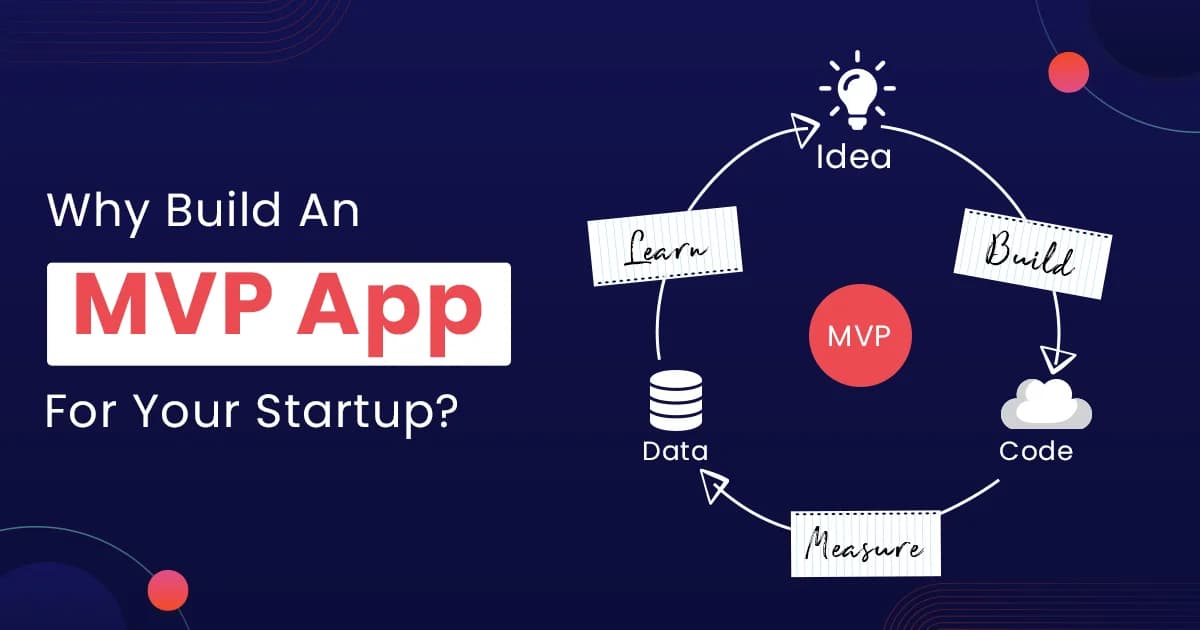
Have a solid app idea but worried that building it "the right way" means months of development and a budget that keeps climbing? That fear stops a lot of good ideas before they ever launch - and it's usually based on a false assumption: that you need every feature built before you can go to market. This blog explains what MVP app development actually means, why it's often the smarter starting point, and how it helps you launch faster without overspending on features you haven't validated yet.
What "MVP" Actually Means (And What It Doesn't)
MVP stands for Minimum Viable Product - a version of your app built with only the core features needed to solve the main problem for your users. It's not a stripped-down, low-quality version of your idea; it's a focused version that lets real users interact with the core value before you invest further.
The goal isn't to build less for the sake of it - it's to build exactly what's needed to test whether your idea works before committing to everything else.
Why Building Everything Upfront Is a Costly Assumption
Many businesses assume more features from day one equals a stronger launch. In practice, it often means:
- Spending months building features users may never actually use
- Delaying launch while competitors move faster with simpler versions
- Making expensive assumptions about what users want, instead of learning from real behaviour
How to Identify What Belongs in Your MVP
The hardest part of MVP development isn't building it - it's deciding what to leave out. A useful way to filter features:
- Must-have: the app doesn't solve the core problem without this
- Should-have: improves the experience but isn't essential to prove the concept
- Could-have: nice additions that can wait until after launch
A delivery app's MVP, for example, needs ordering and basic tracking - but a loyalty rewards system or advanced personalization can usually wait until after you've validated the core idea.
Why MVPs Help You Avoid Overspending
Cost isn't just about how many features you build - it's also about avoiding rework. Launching an MVP lets you validate direction with real users before scaling the backend, adding integrations, or expanding to additional platforms, which reduces the risk of investing heavily in the wrong direction.
This is where solid software development practices matter early on - building your MVP on a foundation that can scale later avoids the far more expensive path of rebuilding from scratch once you're ready to grow.
MVP Doesn't Mean Skipping Platform Strategy
Even at the MVP stage, decisions like native, hybrid, or cross-platform development still matter, since they affect both timeline and how easily the app can scale after launch. Choosing an approach that supports growth from the start prevents a costly rebuild once your MVP proves successful.
What Happens After the MVP Launches
An MVP isn't the finish line - it's the starting point for informed decisions. Once real users are interacting with your app, you'll have actual data on what features to prioritize next, rather than relying on internal assumptions.
Many businesses also use this stage to layer in features like AI automation - such as smart recommendations or automated support - once user behaviour shows where it would add the most value, rather than guessing at launch.
Frequently Asked Questions
Is an MVP the same as a "cheap" or low-quality app?+
No. An MVP is intentionally scoped, not poorly built — it focuses on core functionality done well, rather than every feature done partially.
How do I know which features to include in my MVP?+
Start with the single core problem your app solves, then include only what's essential to deliver that - everything else can typically wait until after launch.
Will I need to rebuild my app after the MVP stage?+
Not if it's built on a scalable foundation from the start. A well-planned MVP is designed to expand, not be thrown away once it proves successful.
How long does MVP app development typically take?+
It depends on the complexity of your core features, but MVPs are generally designed to move faster than full-featured builds since the scope is intentionally focused.
Can I add AI features to my app after the MVP launches?+
Yes - many businesses intentionally wait until after launch to add AI-powered features, once real user data shows where automation would add the most value.
Ready to Launch Your App Without the Overspend?
Building everything at once isn't ambition — it's often just risk wearing a confident face. At Weboraz, we help you scope an MVP that proves your idea works, without wasting budget on features you haven't validated yet. With a hybrid US-India team spanning mobile app development, software development, and AI automation, we build MVPs designed to scale, not get thrown away.
Need help applying this?
Our team can turn the ideas in this article into a clear plan and a polished build.
Book a Consultation