
Work takes longer than it should
Repeated handoffs and avoidable steps consume time that should go into customers and growth.
Most development teams ship slowly not because they write slow code, but because their deployment process is a manual, nerve-wracking event that happens after hours and requires three people on a call to feel safe about it. Weboraz builds the CI/CD pipelines, cloud infrastructure, containerisation, monitoring systems, and automation that make deployment a routine operation — something that happens dozens of times a day without anyone losing sleep.
Designed around the outcome
Reliable cloud infrastructure, automated pipelines, and production monitoring built for real products.
A well-built product running on fragile infrastructure is a fragile product. Servers that go down at peak load. Deployments that require manual steps, crossed fingers, and a rollback plan. Monitoring that tells you something broke after a customer has already reported it. Environments that work on a developer's laptop but fail in production. These are infrastructure and DevOps problems — not code problems.
Weboraz builds cloud infrastructure, CI/CD automation, containerisation, production monitoring, and security practices that make your software reliable, your deployments predictable, and your team's time worth something better than babysitting servers.
The need for devops usually appears as business friction before it looks like a technology problem.
Early fixes are often reasonable. The problem is that they are rarely designed for the volume, coordination, or customer expectations a growing business eventually faces.
A shared method keeps decisions grounded in business context from the first conversation through continuous improvement.
Understand
Clarify
Strategize
Design
Build
Launch
Improve
A well-built product running on fragile infrastructure is a fragile product. Servers that go down at peak load. Deployments that require manual steps, crossed fingers, and a rollback plan. Monitoring that tells you something broke after a customer has already reported it. Environments that work on a developer's laptop but fail in production. These are infrastructure and DevOps problems — not code problems. Weboraz builds cloud infrastructure, CI/CD automation, containerisation, production monitoring, and security practices that make your software reliable, your deployments predictable, and your team's time worth something better than babysitting servers.
What changes
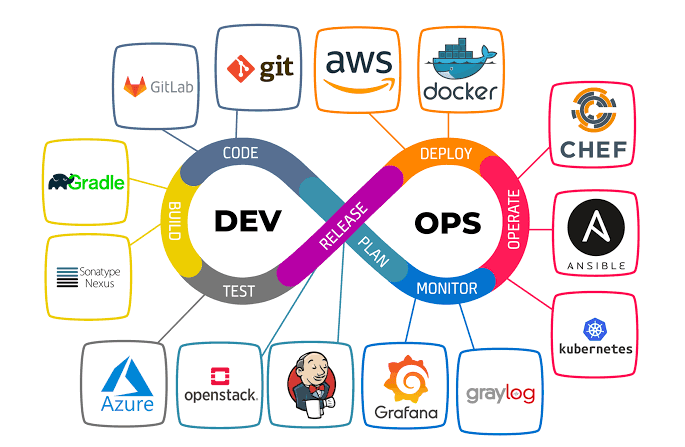
Automated build, test, and deployment pipelines that run on every code push — catching failures in staging before they reach production, enforcing quality gates, and making deployment a reliable automated process rather than a manual Friday-night event that everyone dreads.
AWS, GCP, and Azure infrastructure designed for your application's specific load patterns, scaling requirements, security posture, and cost targets — built as code so it's reproducible, auditable, and not dependent on whoever set it up originally.
Docker containerisation and Kubernetes orchestration that make your application consistent across environments, scalable under load, and deployable without environment-specific surprises — from a developer's laptop to a production cluster.
Production monitoring with real-time dashboards, error tracking, performance metrics, log aggregation, uptime checks, and alerting configured to notify the right people when something needs attention — not on every blip that resolves itself in thirty seconds.
Each part is included because it removes friction, improves confidence, or strengthens the result—not to inflate a feature list.
The value is visible in how customers respond, how teams operate, and how confidently the business can grow.
Before
Manual, repeated effort
After
A clearer and more efficient operating flow
Before
Disconnected customer moments
After
One coherent experience from interest to action
Before
Decisions based on assumptions
After
Useful signals that guide priorities
Before
A solution that strains with growth
After
A foundation designed to adapt with the business
Audit your current infrastructure, deployment process, CI/CD setup, monitoring coverage, security posture, and cost structure — identifying what's fragile, manual, or scaling poorly before designing the solution.
Design the target architecture: cloud platform, service topology, pipeline structure, monitoring stack, security controls, scaling strategy, and a phased migration plan if moving from existing infrastructure.
Build the infrastructure as code, configure the cloud environment, and set up foundational security controls, network policies, and access management before any application workloads run on top of it.
Build and configure CI/CD pipelines, automated test integration, deployment automation, containerisation, and the orchestration that makes development workflows faster without adding fragility at each step.
Test deployments across environments, validate scaling behaviour under simulated load, verify backup and recovery procedures, confirm monitoring and alerting behaves correctly, and audit security controls.
Cut over to new infrastructure with monitoring active, rollback procedures validated, team documentation complete, and the confidence that comes from having tested the failure modes before production traffic arrived.
Monitor operational performance, optimise costs as usage patterns become clear, improve pipeline speed, expand monitoring coverage, and keep infrastructure evolving ahead of the application's requirements.
We choose the simplest dependable tools that fit the outcome, existing environment, and long-term ownership—not what happens to be fashionable.
DevOps should reflect the pressures, expectations, and workflows of the business it serves.
Healthcare
The challenge
Complex journeys and sensitive information
How it helps
Create clearer access, dependable workflows, and experiences people can trust.
Startups
The challenge
Limited time, capital, and room for rework
How it helps
Validate the right priorities early and build a foundation that can evolve.
Professional Services
The challenge
Expertise is difficult to communicate and scale
How it helps
Turn knowledge into a credible, consistent client experience.
Retail
The challenge
Fragmented customer journeys and operational pressure
How it helps
Connect discovery, conversion, and fulfilment around one experience.
Logistics
The challenge
Disconnected teams, tools, and real-time decisions
How it helps
Improve visibility and make everyday operations easier to coordinate.
Practical answers to help you decide whether this is the right investment and what value should look like.
For a software product company, DevOps means having the infrastructure, deployment automation, and operational practices that let your team ship changes quickly and confidently — with automated testing catching issues before production, monitoring detecting problems before customers do, and scaling that handles load without manual intervention.
Yes. We audit your current deployment process, understand your tech stack and team workflow, and build CI/CD pipelines using GitHub Actions, GitLab CI, or your preferred tooling — integrating automated testing, staging deployments, and production release gates into your existing development workflow without disrupting it.
Primarily AWS, with experience in GCP and Azure. We recommend based on your application's requirements, your team's existing familiarity, and your cost targets — not on a preferred vendor relationship. For most early-stage and growth-stage products, AWS provides the best combination of flexibility and managed service quality.
Yes. We containerise existing applications with Docker, configure Kubernetes orchestration where the scale justifies it, and manage the migration from server-based to container-based deployments in a way that maintains availability throughout the transition.
By making deployment automated, tested, and incremental. Automated tests catch regressions before code reaches production. Staged rollouts deploy to a percentage of users first. Feature flags let changes be turned off without a new deployment. Instant rollback means a bad deployment is a five-minute event rather than a two-hour incident with everyone on a bridge call.
Yes. Infrastructure needs ongoing attention — cost optimisation as usage patterns become clear, security updates as the threat landscape changes, new service additions as the product grows, capacity adjustments, and architectural improvements that keep pace with your application's requirements. We support this on an ongoing basis.
Every successful technology project starts with understanding how your business works.