
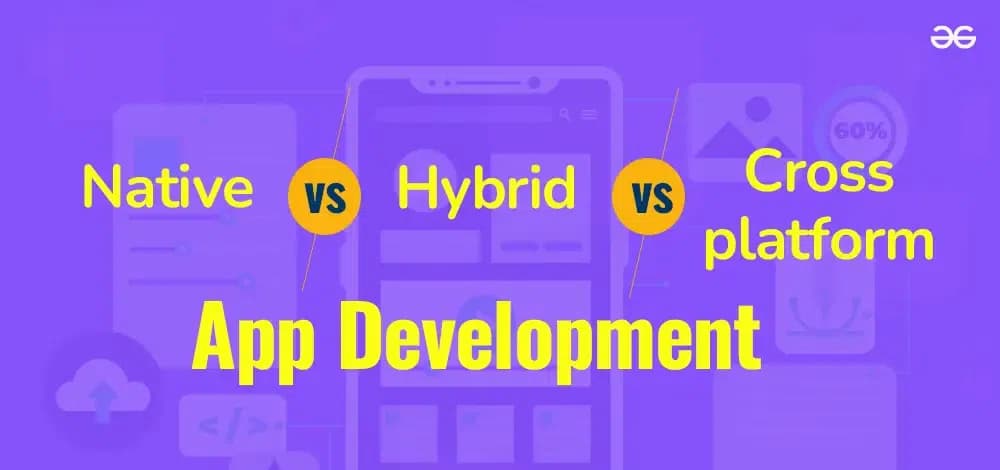
Thinking about building a mobile app but stuck on which development approach actually fits your business? You're not the only one - this is one of the most common points of confusion before a project even starts, and picking the wrong path can mean rebuilding from scratch later. This blog breaks down native, hybrid, and cross-platform app development in plain terms, so you can decide which approach actually makes sense for your goals, budget, and timeline.
What Native App Development Actually Means
Native apps are built specifically for one platform - iOS or Android - using each platform's own programming language and tools (Swift for iOS, Kotlin for Android). Because they're built directly for the platform, they tend to offer the smoothest performance and the most complete access to device features like cameras, sensors, and notifications.
The trade-off is that building natively for both iOS and Android essentially means building two separate apps, which affects both timeline and budget.
What Hybrid App Development Actually Means
Hybrid apps are built using web technologies (HTML, CSS, JavaScript) wrapped inside a native container, allowing one codebase to run on both platforms. This approach is often faster and more budget-friendly to build initially, but it can come with trade-offs in performance and a slightly less "native" feel for the end user.
Hybrid tends to work well for:
- Simpler apps without heavy graphics or complex device integrations
- Businesses wanting to launch quickly and iterate based on real feedback
- Content-driven apps where performance isn't the primary differentiator
What Cross-Platform Development Actually Means
Cross-platform development (using frameworks like React Native or Flutter) sits between native and hybrid. It uses a single shared codebase but compiles closer to native performance than traditional hybrid apps, often making it hard for users to tell the difference from a fully native build.
This is why cross-platform has become a popular middle ground - it aims to combine the development efficiency of hybrid with performance much closer to native.
Comparing the Three: What Actually Changes
Native
- Performance: Highest
- Development Speed: Slower (2 separate codebases)
- Device Feature Access: Full access
- Best For: Performance-heavy or complex apps
Hybrid
- Performance: Lower
- Development Speed: Fastest
- Device Feature Access: Limited
- Best For: Simple, content-based apps
Cross-Platform
- Performance: High, close to native
- Development Speed: Fast (1 shared codebase)
- Device Feature Access: Broad, with some limitations
- Best For: Most business apps balancing speed and quality
Rather than fixed numbers, the right way to think about cost and timeline is that it scales with how complex your app's features, integrations, and performance needs are - not the platform label alone.
How to Match the Approach to Your Business Goals
The right choice usually comes down to a few honest questions:
- How complex is the app? Apps involving heavy graphics, AR/VR, or intensive device features tend to lean native
- How fast do you need to launch? If speed to market matters more than platform-specific polish, hybrid or cross-platform often wins
- What's your long-term roadmap? If you plan to scale significantly, starting with a framework that supports growth (often cross-platform) can save a costly rebuild later
- Who's your audience? If your users are heavily on one platform (e.g., mostly iOS), native may be worth the extra investment
A retail business launching a simple loyalty and ordering app has very different needs than a logistics company building a real-time tracking app with live maps and notifications - and the right development approach reflects that difference.
Where Custom Software Development Fits In
Regardless of which path you choose, the app doesn't exist in isolation - it usually needs to connect to backend systems, databases, and business logic that power the actual functionality. This is where solid software development becomes just as important as the front-end framework decision.
When AI Automation Adds Real Value to an App
Many businesses are now building apps that go beyond static screens - using AI automation to power features like smart recommendations, automated customer support within the app, or intelligent workflows that reduce manual work for both the business and the user. This is worth factoring into your decision early, since not every framework supports this equally well.
Frequently Asked Questions
Which is cheaper: native, hybrid, or cross-platform app development?+
Hybrid and cross-platform generally cost less upfront since they use a single codebase for both platforms, while native typically costs more due to building separate apps for iOS and Android.
Can a hybrid app be upgraded to native later?+
Technically yes, but it usually means significant rework rather than a simple upgrade, which is why it's worth thinking through long-term goals before choosing an approach.
Is cross-platform development good enough for a serious business app?+
Yes, for most business applications. Frameworks like React Native and Flutter now power apps used by major companies, offering performance close to native for the vast majority of use cases.
Do I need a native app if I already have a mobile-friendly website?+
Not necessarily — it depends on whether you need device-specific features like push notifications, offline access, or camera integration that a website can't fully replicate.
How do I know which approach is right for my specific business?+
The clearest way is to map out your must-have features, budget, and timeline first, then match those priorities against the strengths of each approach rather than picking a framework before defining the goals.
Not Sure Which App Approach Fits Your Business?
Choosing between native, hybrid, and cross-platform isn't really a technical decision first — it's a business decision that happens to have technical implications. At Weboraz, we start by understanding what your app actually needs to do, then recommend the development approach that fits your goals, not the other way around. With a hybrid US-India team spanning mobile app development, software development, and AI automation, we build apps designed to grow with your business.
Need help applying this?
Our team can turn the ideas in this article into a clear plan and a polished build.
Book a Consultation