
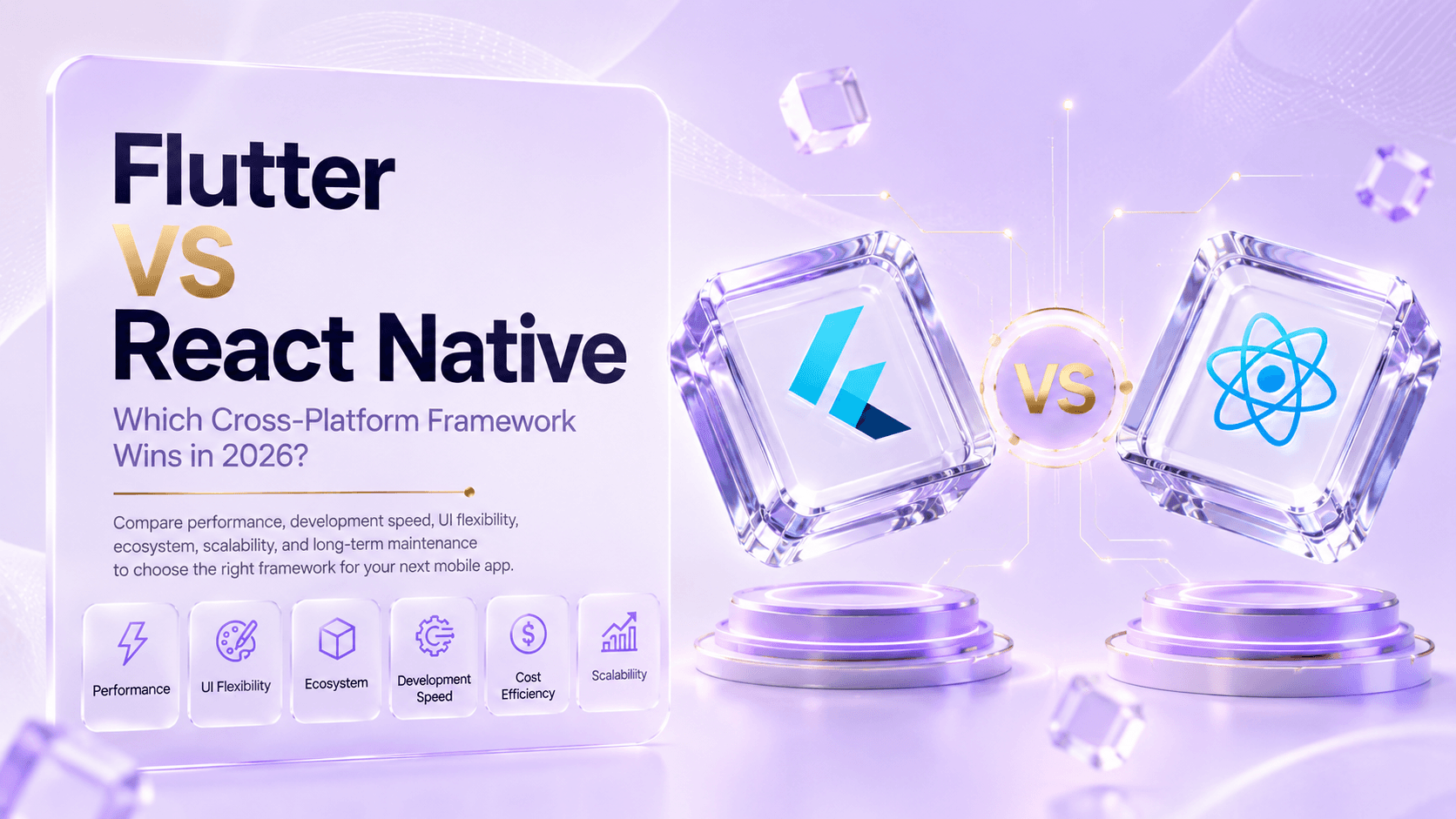
Flutter and React Native have both matured significantly over the years, and by 2026, the "which one is better" debate has less to do with one framework being objectively superior and more to do with which one actually fits your specific project, team, and goals. Choosing between them based on hype or popularity alone can lead to friction down the line if the framework doesn't match your app's real needs. This blog breaks down how Flutter and React Native actually compare today, so you can make a decision based on fit, not trend.
A Quick Refresher on What Each Framework Is
React Native, built by Meta, uses JavaScript and React to build cross-platform apps, rendering through native components under the hood. Flutter, built by Google, uses the Dart programming language and renders its own UI components directly, rather than relying on native ones.
That core architectural difference - native component rendering versus Flutter's own rendering engine - still shapes many of the practical differences between them today.
Performance: How They Compare in 2026
Both frameworks have closed much of the performance gap with fully native apps over the years. Flutter's rendering approach tends to offer very consistent performance across platforms, since it doesn't depend on native component bridging. React Native has significantly improved its own performance through architectural updates, narrowing the gap considerably.
For most typical business apps, the performance difference between the two is unlikely to be the deciding factor - both are capable of delivering a smooth, native-feeling experience when built well.
Developer Experience and Talent Availability
React Native's use of JavaScript means it draws from a much larger existing pool of web developers, which can make finding experienced talent somewhat easier. Flutter's Dart language is less widely known, though its developer community has grown substantially and the learning curve is generally considered manageable for experienced developers.
This distinction matters more for long-term maintenance and team scaling than for the initial build itself.
UI Consistency Across Platforms
Flutter tends to offer more consistent UI rendering across iOS and Android, since it draws its own components rather than relying on each platform's native ones. React Native, by using native components, can sometimes require more platform-specific adjustments to achieve pixel-perfect consistency between platforms.
For businesses prioritizing a highly consistent look and feel across devices, this is a meaningful consideration.
Access to Native Features and Third-Party Integrations
Both frameworks offer strong access to native device features through plugins and packages, and both ecosystems have matured significantly. React Native's longer market presence means an extensive library of existing integrations, while Flutter's ecosystem has grown rapidly and now covers most common use cases as well.
For highly specialized or cutting-edge device features, it's worth checking current plugin support for your specific use case rather than assuming either framework universally wins here.
Long-Term Maintenance Considerations
Both frameworks are actively maintained by major companies, reducing the risk of either becoming obsolete. That said, long-term maintenance costs often depend more on how well the initial software development was structured than on the framework choice itself - a poorly architected app in either framework will be harder to maintain than a well-structured one.
When Flutter Tends to Be the Stronger Choice
Flutter often makes more sense when:
- Highly consistent UI across platforms is a top priority
- The team is starting fresh without existing React/JavaScript expertise to leverage
- The app involves custom, detailed visual design that benefits from Flutter's rendering control
When React Native Tends to Be the Stronger Choice
React Native often makes more sense when:
- Your team already has strong JavaScript or React expertise
- You want access to the largest possible pool of developer talent for long-term maintenance
- Your app doesn't require highly custom, pixel-perfect UI consistency across platforms
Why the Framework Decision Is Only Part of the Bigger Picture
Regardless of which framework you choose, the app still depends on solid backend software development and thoughtful architecture to perform well and scale. The framework affects the frontend experience significantly, but it doesn't replace the need for a well-planned overall build.
Where AI Automation Fits Regardless of Framework
Both Flutter and React Native support integrating AI automation features, such as smart recommendations or automated support, equally well in most cases - the framework choice rarely limits this kind of functionality on its own.
Frequently Asked Questions
Is Flutter or React Native better for performance in 2026?
Both offer strong performance for most business apps today. Flutter tends to have more consistent performance across platforms, while React Native has closed much of the historical gap through architectural improvements.
Which framework is easier to find developers for?
React Native generally has a larger available talent pool, since it uses JavaScript, a widely known language among web developers.
Does Flutter or React Native offer better UI consistency across iOS and Android?
Flutter tends to offer more consistent UI rendering across platforms, since it uses its own rendering engine rather than relying on native components.
Can I switch from one framework to the other later?
Technically yes, but it typically requires significant rebuilding rather than a simple migration, which is why it's worth choosing thoughtfully upfront.
Is one framework definitively better than the other in 2026?
Not really. Both are mature, well-supported frameworks - the better choice depends on your team's expertise, UI priorities, and specific project needs rather than one framework being universally superior.
Not Sure Which Framework Fits Your App?
Flutter versus React Native isn't about which one is objectively best - it's about which one fits your team, your app, and your priorities. At Weboraz, we help you make that call based on your actual project, not whichever framework happens to be trending. With a hybrid US-India team spanning mobile app development, software development, and AI automation, we build cross-platform apps designed around what your business actually needs.
Get a free framework consultation from Weboraz and find out which one is right for your app.
Frequently asked questions
Both offer strong performance for most business apps today. Flutter tends to have more consistent performance across platforms, while React Native has closed much of the historical gap through architectural improvements.
React Native generally has a larger available talent pool, since it uses JavaScript, a widely known language among web developers.
Flutter tends to offer more consistent UI rendering across platforms, since it uses its own rendering engine rather than relying on native components.
Technically yes, but it typically requires significant rebuilding rather than a simple migration, which is why it's worth choosing thoughtfully upfront.
Not really. Both are mature, well-supported frameworks - the better choice depends on your team's expertise, UI priorities, and specific project needs rather than one framework being universally superior.
Related Articles


Need help applying this?
Our team can turn the ideas in this article into a clear plan and a polished build.
Contact Us