
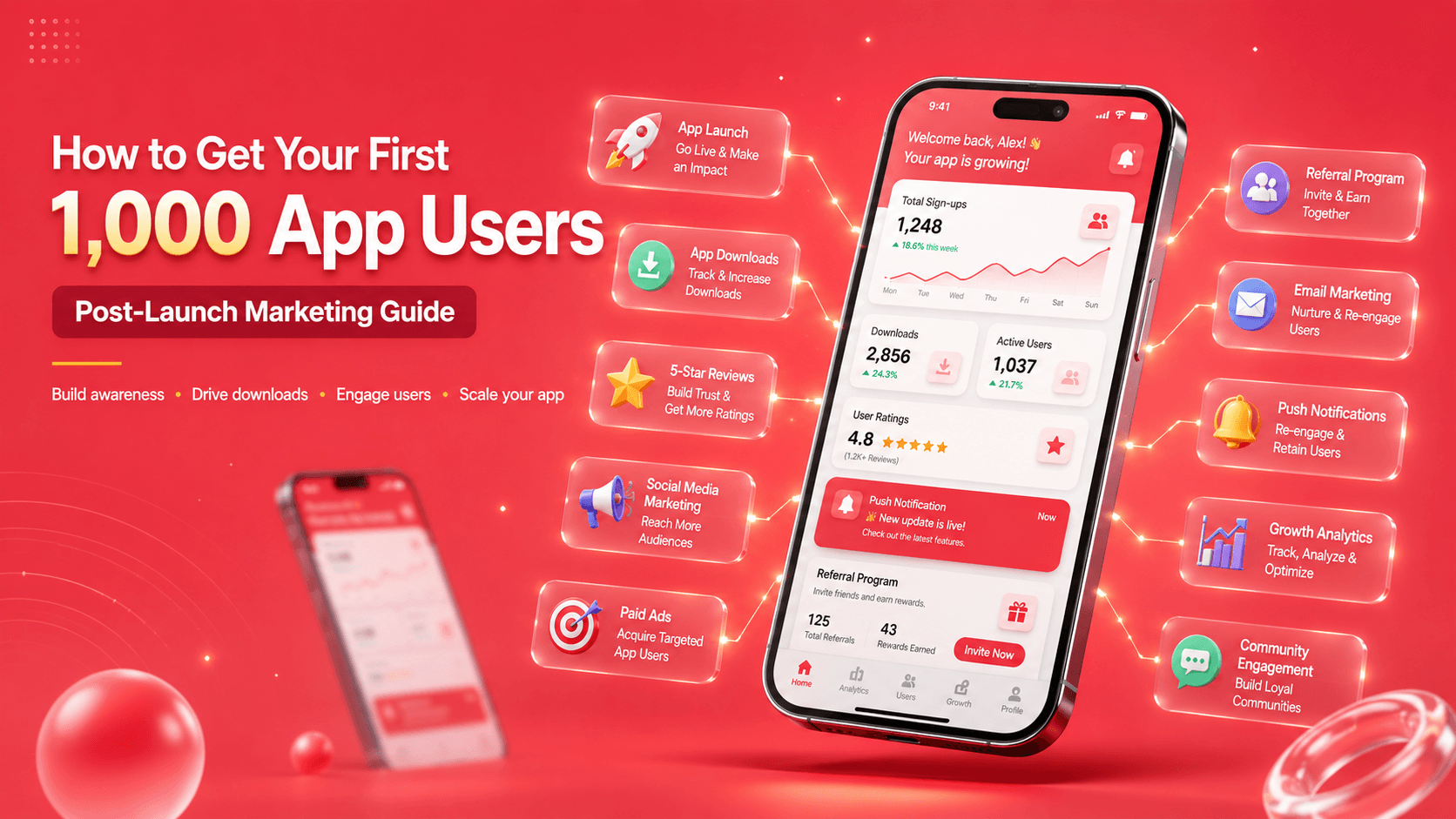
Launching an app is a major milestone, but it's rarely the moment users start showing up on their own. The gap between "the app is live" and "people are actually using it" catches many founders off guard, especially without a marketing budget to match a big competitor. This guide walks through practical, realistic ways to reach your first 1,000 app users, focused on strategies that work at an early stage, not just theory that assumes you already have a following.
Start With People Who Already Know You
Before trying to reach strangers, tap into your existing network first:
- Personal and professional contacts who fit your target user profile
- Existing email lists, social followers, or community connections
- Anyone who was involved in validating your idea earlier in the process
These early users are often more forgiving of rough edges and more likely to give honest, useful feedback than strangers acquired through paid channels.
Leverage Your Pre-Launch Waitlist, If You Built One
If you validated your app idea with a landing page or waitlist before development, this is the moment that early groundwork pays off. Reach out directly, remind people the app is now live, and make it as easy as possible for them to download and start using it.
Find Where Your Target Users Already Gather
Rather than trying to reach everyone, identify the specific online communities, forums, or social spaces where your target users already spend time. Genuine participation - answering questions, sharing insights, being helpful - tends to build more credibility than obvious self-promotion.
Use Content to Build Visibility Over Time
Creating content around the problem your app solves helps attract users organically, even before you have a large following. This might include:
- Blog posts addressing the specific problem your app solves
- Short-form video content demonstrating the app in action
- Sharing genuine behind-the-scenes insights into building the app
This approach takes longer to show results than paid ads, but it builds a foundation of organic discovery that continues working over time.
Encourage Early Users to Share and Refer
Word-of-mouth remains one of the most effective ways to grow early app adoption. Consider:
- A simple referral incentive for users who invite others
- Making it easy to share the app directly from within the experience
- Asking satisfied early users directly if they know others who'd benefit
Direct, personal asks often outperform generic sharing prompts at this early stage.
Get Featured Where Your Users Already Look for New Apps
Depending on your app category, certain platforms and directories are worth pursuing for visibility:
- App store feature opportunities, if your app fits current promotional themes
- Relevant industry newsletters or blogs that cover new tools in your space
- Product discovery platforms where early adopters actively look for new apps
These aren't guaranteed wins, but even modest coverage can meaningfully boost early visibility.
Consider Small, Targeted Paid Campaigns
If budget allows, small and highly targeted paid campaigns can help reach specific user segments faster than organic methods alone. The key at this stage is starting small, testing what resonates, and refining based on real results rather than committing a large budget upfront without data.
Pay Close Attention to Onboarding
Getting someone to download your app is only half the goal - getting them to actually experience its value quickly matters just as much. A confusing or lengthy onboarding process can lose users before they ever see what makes the app worthwhile, undermining all the effort spent acquiring them in the first place.
Track What's Actually Working
Rather than spreading effort evenly across every channel, pay attention to which acquisition sources are actually converting into engaged users, and lean further into what's working rather than continuing to invest evenly across everything.
Use Automation to Support, Not Replace, Genuine Engagement
Some early-stage apps use AI automation to handle onboarding support or answer common early-user questions, freeing up founder time to focus on the relationship-building activities - outreach, community engagement, direct conversations - that tend to matter most at this stage.
Why the First 1,000 Users Matter More Than the Number Suggests
Beyond the number itself, your first 1,000 users often shape word-of-mouth, provide critical product feedback, and validate whether your broader growth strategy is working before you invest more heavily in scaling acquisition further.
Frequently Asked Questions
Do I need a marketing budget to get my first 1,000 app users?
Not necessarily. Many early-stage strategies - personal networks, organic content, community engagement - rely more on time and effort than a significant budget.
How long does it typically take to reach 1,000 users after launch?
It varies widely based on app category, audience, and marketing effort, so it's more useful to focus on consistent, trackable progress than a fixed timeline expectation.
Should I focus on paid ads or organic growth first?
Most early-stage apps benefit from starting with organic and personal network strategies first, then testing small paid campaigns once there's some initial traction and data to guide targeting.
What's the biggest mistake founders make when trying to grow early app users?
Spreading effort too thin across every possible channel, rather than focusing on the few that are actually converting, is a common early mistake.
Why does onboarding matter for user growth?
If new users don't quickly understand or experience the app's value, they're unlikely to stay or recommend it, which undermines the effort spent acquiring them in the first place.
Ready to Turn Your Launch Into Real Traction?
Getting your first 1,000 users takes a deliberate strategy, not just hoping people find the app on their own. At Weboraz, we help founders think through both the build and the post-launch growth strategy from the start, so momentum doesn't stall right after launch. With a hybrid US-India team spanning mobile app development, software development, and AI automation, we help you build an app people actually find and stick with.
Get a free post-launch strategy consultation from Weboraz and find out how to reach your first users faster.
Frequently asked questions
Not necessarily. Many early-stage strategies - personal networks, organic content, community engagement - rely more on time and effort than a significant budget.
It varies widely based on app category, audience, and marketing effort, so it's more useful to focus on consistent, trackable progress than a fixed timeline expectation
Most early-stage apps benefit from starting with organic and personal network strategies first, then testing small paid campaigns once there's some initial traction and data to guide targeting
Spreading effort too thin across every possible channel, rather than focusing on the few that are actually converting, is a common early mistake.
If new users don't quickly understand or experience the app's value, they're unlikely to stay or recommend it, which undermines the effort spent acquiring them in the first place.
Related Articles
Need help applying this?
Our team can turn the ideas in this article into a clear plan and a polished build.
Contact Us