

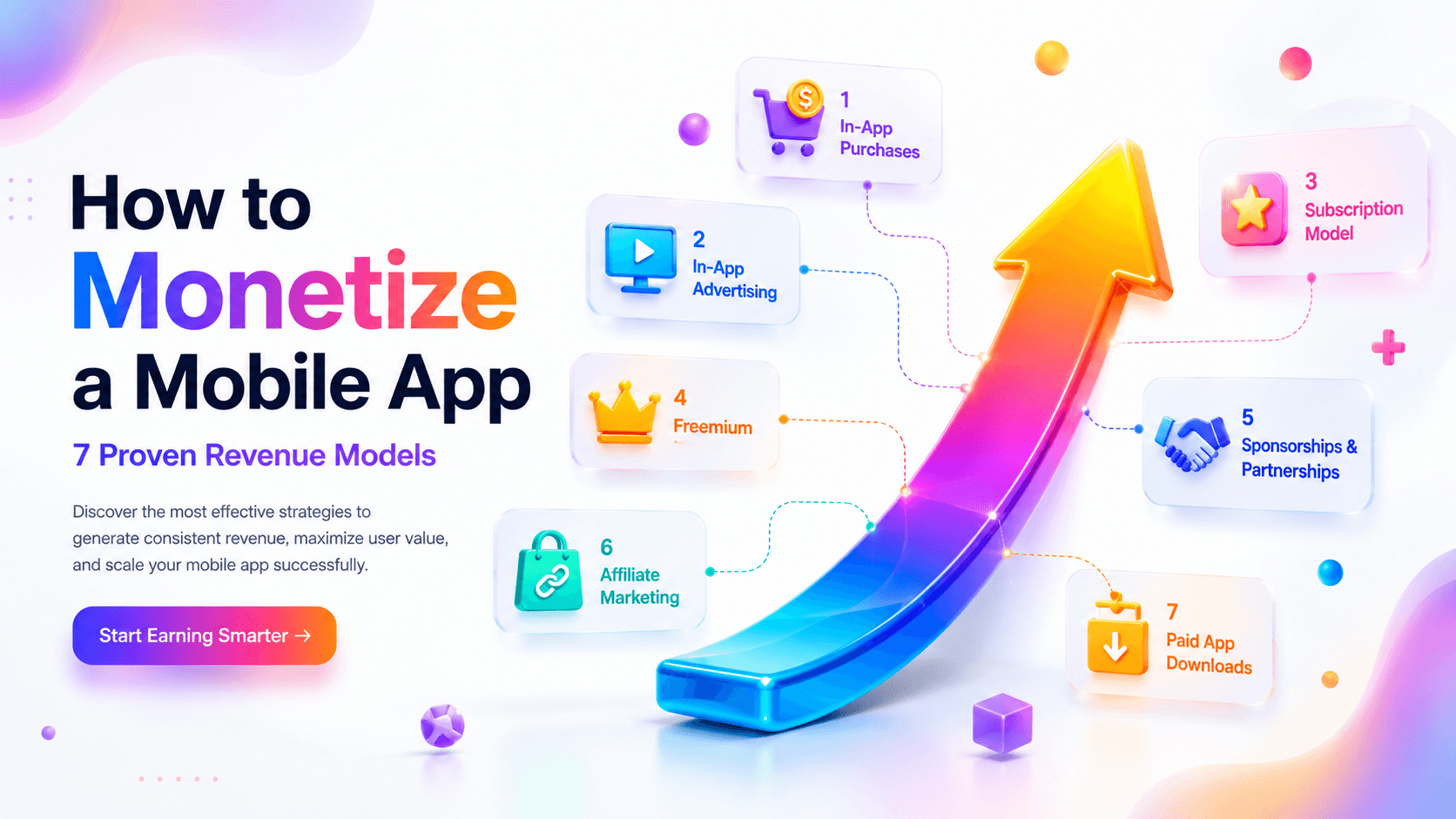
Building a great app doesn't automatically mean building a profitable one - monetization is a separate decision that needs just as much thought as the app's core features. Choosing the wrong model can quietly limit growth, frustrate users, or leave real revenue on the table. This blog walks through seven proven ways to monetize a mobile app, so you can choose the model that actually fits your product and your users.
1. In-App Purchases
In-app purchases let users buy additional content, features, or items directly within the app - common in gaming apps, but increasingly used across other categories too.
This model works well when:
- The core app is free, lowering the barrier to initial downloads
- There are clear, desirable upgrades or additions users would want to pay for
- Purchases feel optional, not necessary to use the app's core functionality
The risk is designing purchases that feel manipulative or essential rather than genuinely optional, which can damage user trust.
2. Subscription Model
Subscriptions charge users on a recurring basis - weekly, monthly, or yearly - for continued access to the app or premium features. This model has become increasingly popular because it creates predictable, recurring revenue rather than a single one-time payment.
Subscriptions tend to work best when:
- The app delivers ongoing value over time, not just a one-time use case
- Content or features are updated regularly, justifying continued payment
- There's a clear enough value proposition to reduce cancellation rates
3. Freemium Model
Freemium apps offer a free version with basic functionality, while charging for premium features, removing limitations, or unlocking additional content. This lowers the barrier to entry while still creating a path to revenue for users who want more.
The key to freemium success is balance - the free version needs to be genuinely useful enough to attract users, while the premium version offers clear enough value to convert a meaningful percentage of them.
4. In-App Advertising
Advertising monetization generates revenue by displaying ads within the app, without directly charging users. This model works particularly well for apps with high user volume and frequent engagement, since ad revenue depends heavily on traffic and usage patterns.
Common approaches include:
- Banner ads displayed within the app interface
- Interstitial ads shown between actions or screens
- Rewarded video ads, where users choose to watch content in exchange for in-app benefits
The tradeoff is balancing ad revenue against user experience - too many or poorly placed ads can drive users away entirely.
5. Paid App (Upfront Purchase)
Some apps simply charge a one-time fee before users can download them at all. This model has become less common as freemium and subscription approaches have grown, but it still works for certain categories, particularly niche or professional tools where users expect to pay upfront for quality.
The main challenge is that charging upfront significantly reduces the number of people willing to try the app in the first place, compared to a free download.
6. Transaction Fees
For apps that facilitate transactions between users - marketplaces, booking platforms, or service apps - charging a small fee per transaction is a common and often highly scalable monetization model. Revenue grows naturally with usage, rather than depending on convincing users to pay separately for the app itself.
This model works especially well when the app is genuinely facilitating value between two parties, rather than just hosting content.
7. Data and Licensing (Used Carefully and Transparently)
Some apps generate revenue by licensing anonymized, aggregated data or by partnering with other businesses for integrations, always with clear user consent and transparency about what data is collected and how it's used.
This model requires careful attention to privacy regulations and user trust, since mishandling this aspect can cause significant reputational and legal risk.
Many Apps Combine Multiple Models
Rather than choosing just one, many successful apps combine models - such as a freemium structure with both subscription upgrades and in-app advertising for free-tier users. The right combination depends on your specific app, user base, and how people naturally want to engage with it.
Why Monetization Should Be Considered Early, Not After Launch
Retrofitting monetization into an app built without it in mind often requires significant rework. Thinking through your monetization model during the software development planning stage, rather than after launch, tends to result in a smoother, more natural user experience around payments or ads.
Where AI Automation Can Support Monetization
Some apps use AI automation to personalize which upgrade prompts or ad content a specific user sees, based on their behavior patterns, which can improve conversion rates without making the experience feel generic or one-size-fits-all.
Frequently Asked Questions
Which app monetization model generates the most revenue?
It depends entirely on the app category and user base - subscriptions often generate strong recurring revenue, while advertising works better for high-traffic, frequently used apps.
Can an app use more than one monetization model at once?
Yes, and many successful apps do - combining approaches like freemium features with advertising for free-tier users is a common, effective strategy.
Is in-app advertising bad for user experience?
Not necessarily, but poorly placed or excessive ads can be. Thoughtful ad placement and frequency are key to monetizing without driving users away.
Should monetization be planned before or after building the app?
Ideally before. Planning monetization during development tends to result in a smoother user experience than retrofitting payment systems after launch.
Is a subscription model right for every type of app?
No. Subscriptions work best for apps delivering ongoing value over time - a one-time-use app may be better suited to a different monetization model entirely.
Ready to Build a Monetization Strategy That Fits Your App?
The right monetization model depends on your specific app, users, and goals - not a generic formula. At Weboraz, we help you think through monetization as part of the development process itself, not an afterthought bolted on after launch. With a hybrid US-India team spanning mobile app development, software development, and AI automation, we build apps designed to generate real, sustainable revenue.
Get a free app monetization consultation from Weboraz and find out which model actually fits your app.
Frequently asked questions
It depends entirely on the app category and user base - subscriptions often generate strong recurring revenue, while advertising works better for high-traffic, frequently used apps.
Yes, and many successful apps do - combining approaches like freemium features with advertising for free-tier users is a common, effective strategy.
Not necessarily, but poorly placed or excessive ads can be. Thoughtful ad placement and frequency are key to monetizing without driving users away.
Ideally before. Planning monetization during development tends to result in a smoother user experience than retrofitting payment systems after launch.
No. Subscriptions work best for apps delivering ongoing value over time - a one-time-use app may be better suited to a different monetization model entirely.
Related Articles
Need help applying this?
Our team can turn the ideas in this article into a clear plan and a polished build.
Contact Us