

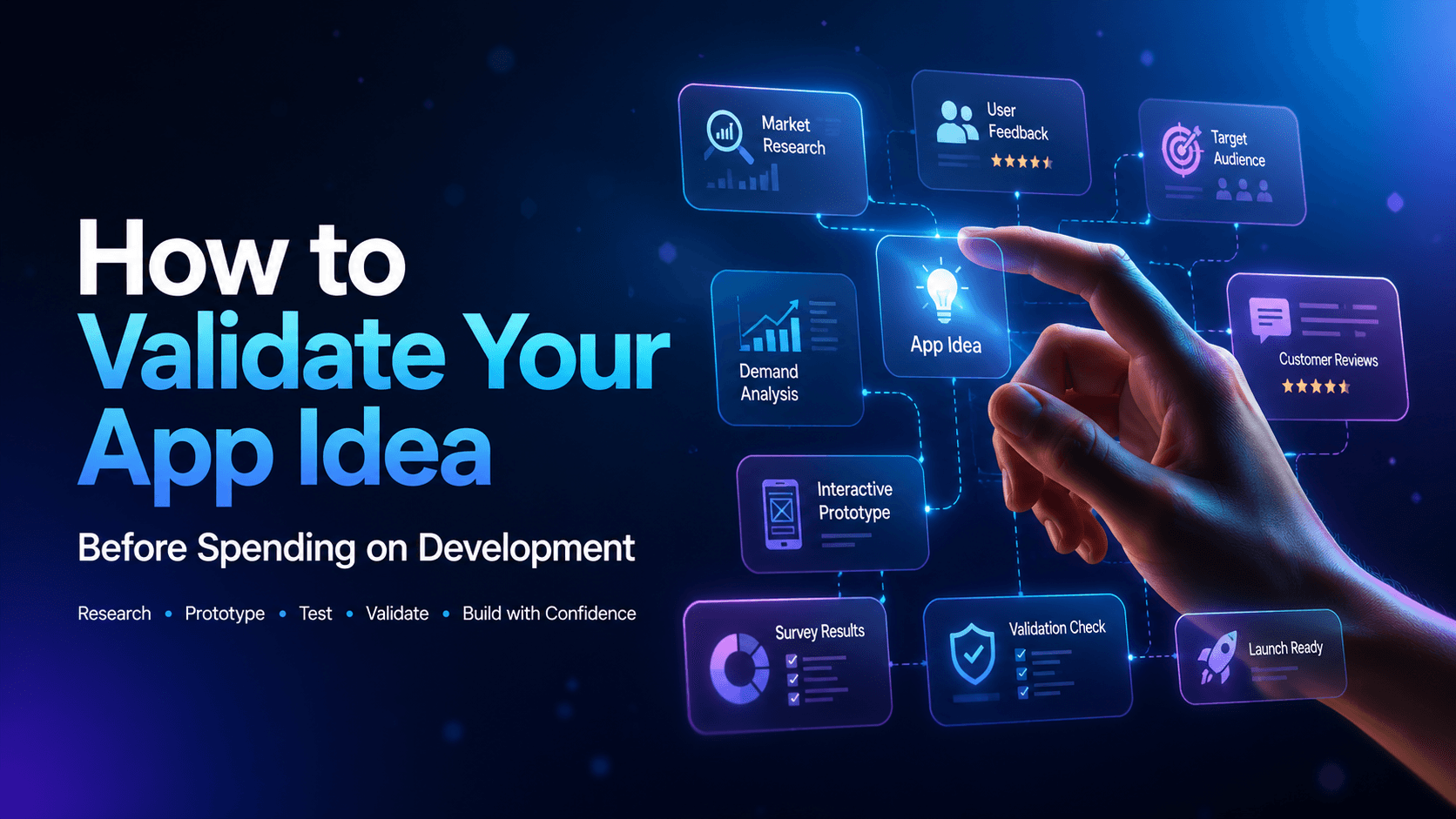
Every founder is convinced their app idea is the one people have been waiting for — and that confidence, while important, isn't the same as evidence that people will actually use or pay for it. Skipping validation is one of the most common and costly mistakes in app development, since it means investing real money before knowing whether the core assumption behind the idea actually holds up. This blog walks through practical ways to validate your app idea before committing to development, so you're building based on evidence, not just belief.
Why Validation Matters More Than the Idea Itself
A brilliant idea poorly validated can still fail, while a modest idea backed by real evidence of demand often succeeds. Validation isn't about proving your idea is good in the abstract — it's about confirming that real people have the problem you think they have, and that they'd actually use a solution for it.
Start by Talking to Real Potential Users
Before building anything, the simplest and cheapest validation step is having direct conversations with people who match your target audience. Focus on:
- Understanding how they currently solve the problem your app addresses
- Asking what frustrates them about existing solutions, if any exist
- Listening for genuine pain points, not just polite interest in your idea
The goal isn't to pitch your app — it's to listen for whether the problem you're solving is one people actually feel strongly about.
Look for Evidence the Problem Already Exists
Beyond direct conversations, look for existing signals that validate demand:
- Are people actively discussing this problem in online communities or forums?
- Are there existing (even imperfect) solutions people are already using or complaining about?
- Is there search volume or ongoing conversation around the problem your app would solve?
A complete lack of existing discussion or workaround solutions can sometimes signal a problem people don't feel strongly enough about to solve.
Build a Landing Page Before You Build the App
A simple landing page describing your app's core value proposition, with a signup form or waitlist, can validate interest before a single line of app code gets written. If people are willing to give their email for early access, that's a meaningful signal. If a well-crafted page generates little interest, that's valuable information too — cheaply obtained.
Create a Minimal Prototype, Not a Full Build
Before committing to full mobile app development, a clickable prototype or mockup can test whether the actual user experience makes sense, without the cost of building functional software. This step often reveals usability issues or confusing flows that wouldn't have been obvious from the idea alone.
Test With a Manual or "Fake Door" Version First
Some of the most effective validation happens by manually delivering the value your app promises, before automating anything. If your app idea involves matching users with a service, for example, doing that matching manually at first can validate whether people actually want the outcome, before investing in the technology to automate it.
Pay Attention to What People Do, Not Just What They Say
People are often polite when asked directly whether they'd use an app — genuine validation comes from observing actual behavior. Did they sign up for the waitlist? Did they use the manual version repeatedly? Actions are a far more reliable signal than verbal enthusiasm.
Once Validated, Scope a Focused MVP
After validation gives you real confidence in the idea, the next step isn't building your full vision — it's scoping a Minimum Viable Product that tests the core experience with real users, before expanding further based on actual usage data rather than assumptions.
Where Software Development Fits Into the Validation Process
Even at the validation stage, it helps to loop in experienced software development guidance early, since understanding what's technically feasible and roughly what it would cost can shape how you frame and test your idea, before assumptions about complexity turn out to be wrong later.
Where AI Automation Might Fit Later, Not First
It's tempting to want AI-powered features baked into your app from day one, but validation should focus on your app's core value first. AI automation can often be layered in later, once real user behavior shows where it would genuinely add value, rather than guessing upfront.
Frequently Asked Questions
How much should I spend validating an app idea?
Very little compared to full development — most validation methods, like landing pages or direct conversations, cost time more than money.
Is a landing page enough to validate an app idea?
It's a strong early signal, but combining it with direct user conversations and behavioral evidence gives a more complete picture of real demand.
Should I build a prototype before writing any actual code?
Yes, in most cases. A clickable prototype can validate the user experience and reveal usability issues far more cheaply than a full development build.
What's a "fake door" test in app validation?
It's a method where you manually deliver the app's core value before building the technology, to confirm real demand exists before investing in automation.
When should I move from validation to actual development?
Once you have clear evidence — signups, engagement, or manual demand — that people genuinely want the solution, not just polite interest in the concept.
Ready to Validate, Then Build?
The businesses that succeed with app ideas usually validated first and built second — not the other way around. At Weboraz, we help you think through validation before committing to a full build, so your investment goes toward something proven, not just promising. With a hybrid US-India team spanning mobile app development, software development, and AI automation, we help you move from validated idea to working app the right way.
Get a free app idea consultation from Weboraz and find out how to validate before you build
Frequently asked questions
Very little compared to full development — most validation methods, like landing pages or direct conversations, cost time more than money.
It's a strong early signal, but combining it with direct user conversations and behavioral evidence gives a more complete picture of real demand.
Yes, in most cases. A clickable prototype can validate the user experience and reveal usability issues far more cheaply than a full development build.
It's a method where you manually deliver the app's core value before building the technology, to confirm real demand exists before investing in automation.
Once you have clear evidence — signups, engagement, or manual demand — that people genuinely want the solution, not just polite interest in the concept.
Related Articles
Need help applying this?
Our team can turn the ideas in this article into a clear plan and a polished build.
Contact Us