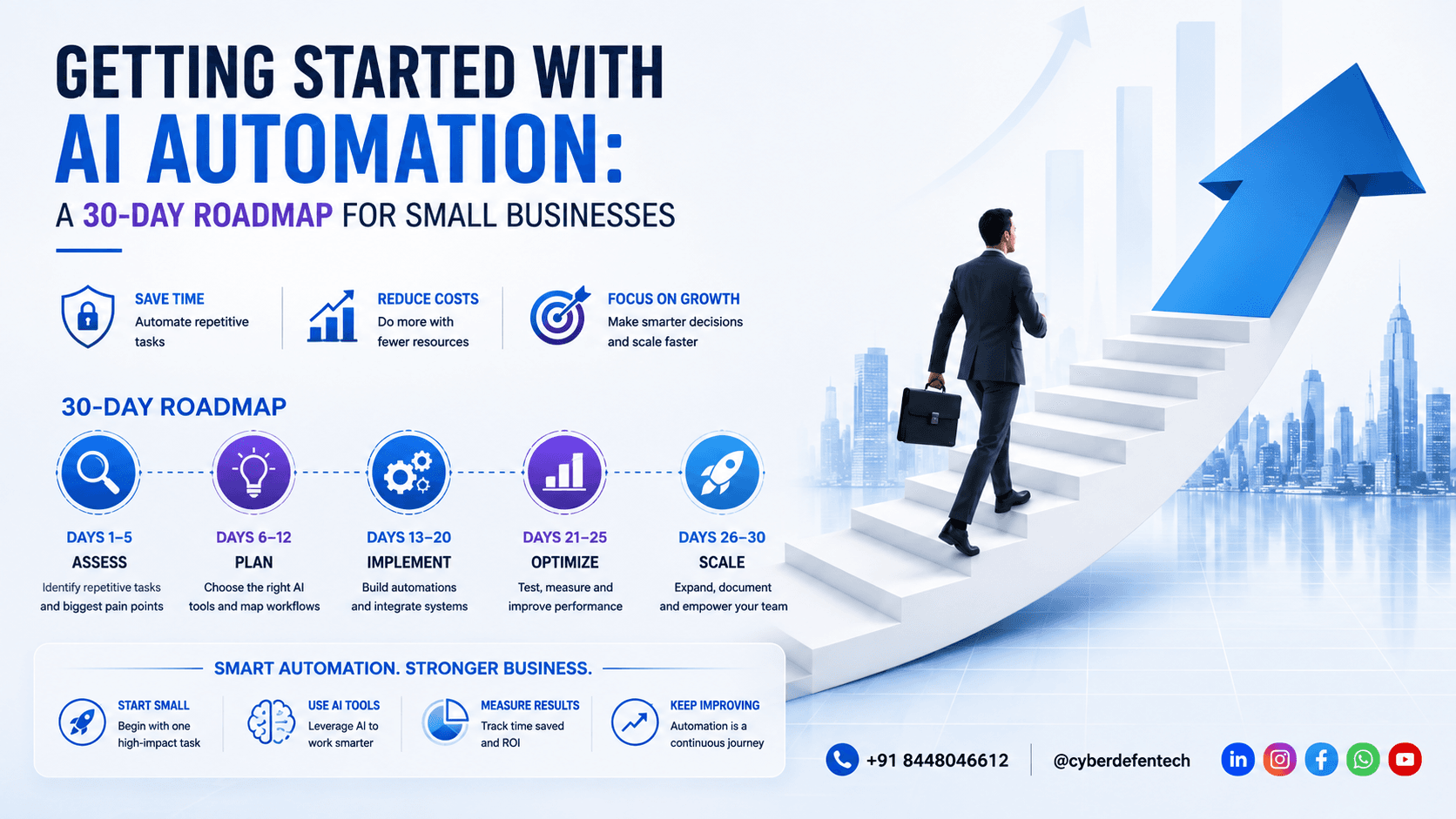
Getting started with AI automation doesn't require a massive overhaul or months of planning - a focused 30-day window is often enough to identify a real bottleneck, implement a targeted solution, and start seeing measurable results. The key is having a clear, structured plan rather than vague intentions to "explore AI" at some point. This roadmap breaks the process into a realistic 30-day timeline small businesses can actually follow.
Days 1–5: Identify the Right Starting Point
The first week should focus entirely on finding the right opportunity, not jumping into implementation.
- Days 1–2: List out repetitive, time-consuming tasks across your team — customer questions, data entry, scheduling, follow-ups
- Days 3–4: Talk to your team directly about where they lose the most time or where errors happen most often
- Day 5: Narrow the list down to one clear, specific bottleneck worth solving first
Resist the urge to tackle multiple areas simultaneously — a focused first win builds both momentum and internal confidence in automation.
Days 6–10: Define What Success Looks Like
Before building anything, get specific about what you're actually trying to achieve.
- Days 6–7: Define the exact outcome you want - faster response times, fewer manual hours, reduced errors
- Days 8–9: Identify what data or systems the automation will need access to
- Day 10: Set a realistic, measurable goal for what success looks like after implementation
Having a clear success metric upfront makes it much easier to evaluate whether the automation is actually working once it's live.
Days 11–15: Evaluate Your Approach
This stage is about deciding how the automation will actually be built and implemented.
- Days 11–12: Determine whether an existing tool can solve this, or whether it requires custom software development tailored to your specific process
- Days 13–14: If working with a development partner, have initial conversations and get a realistic scope and timeline
- Day 15: Finalize your approach and confirm what's needed to move into implementation
Days 16–22: Build and Configure
This is the core implementation window, whether you're configuring an existing tool or building something custom.
- Days 16–18: Begin setup or development, focused specifically on your defined bottleneck
- Days 19–20: Integrate with any existing systems the automation needs to pull from or feed into
- Days 21–22: Conduct initial internal testing to catch obvious issues before wider use
Keeping this stage focused on your one specific use case, rather than expanding scope midstream, keeps the 30-day timeline realistic.
Days 23–26: Test With Real Scenarios
Before fully launching, validate the automation against real, varied situations.
- Days 23-24: Test with a range of realistic scenarios, not just the simplest cases
- Day 25: Identify and fix any gaps or unexpected issues that surface
- Day 26: Prepare your team for the transition, including how to handle any exceptions
Days 27-30: Launch and Begin Monitoring
The final stretch focuses on going live and starting to gather real data.
- Day 27: Launch the automation for real use, ideally starting with a smaller scope if possible
- Days 28-29: Monitor closely for early issues, unexpected behavior, or user confusion
- Day 30: Review initial results against the success metric you defined earlier in the roadmap
What Happens After Day 30
Thirty days is enough time to launch a focused first automation, but it's just the starting point. From here, most businesses move into an ongoing cycle: refining based on real usage, expanding to a second bottleneck once the first is stable, and gradually building a broader AI automation strategy based on evidence rather than assumptions.
Why a Focused Scope Matters More Than Speed
The temptation during a 30-day roadmap is to expand scope once momentum builds. Resisting that temptation and staying focused on one clear win tends to produce better, more reliable results than attempting a broader rollout before the first automation has proven itself.
Where Software Development Fits Into This Timeline
For automations requiring more than a simple existing tool, this roadmap assumes reasonably scoped custom software development. More complex integrations or highly specific business logic may extend certain stages, which is why defining a focused, specific bottleneck in the first week matters so much for keeping the overall timeline realistic.
Frequently Asked Questions
Is 30 days realistic for implementing AI automation?
For a focused, well-scoped use case, yes. More complex automations involving significant custom development may take longer, which is why narrowing scope in the first week matters.
What if I can't identify a clear bottleneck in the first week?
Talking directly with your team about repetitive, frustrating tasks usually surfaces a clear starting point - if not, starting with the most time-consuming manual process is a reasonable default.
Do I need a development partner to follow this roadmap?
Not necessarily, if an existing tool can solve your specific bottleneck. Custom development becomes relevant when your use case requires more tailored functionality.
What happens if the automation doesn't meet its success metric by day 30?
That's valuable information, not failure - it usually signals a need for refinement, and most successful automations improve significantly through iteration after initial launch.
Should I automate multiple processes at once to move faster?
It's generally better to focus on one clear win first, since spreading effort across multiple processes simultaneously tends to slow progress and dilute results.
Ready to Start Your 30-Day Automation Journey?
Thirty days is enough time to move from idea to a real, working automation win - if the plan is focused and realistic. At Weboraz, we help small businesses identify the right starting point and build toward it methodically, rather than promising an overnight AI transformation. With a hybrid US-India team spanning AI automation, software development, and web development, we turn a 30-day roadmap into real results.
Get a free automation roadmap consultation from Weboraz and find out what your first 30 days could look like.