
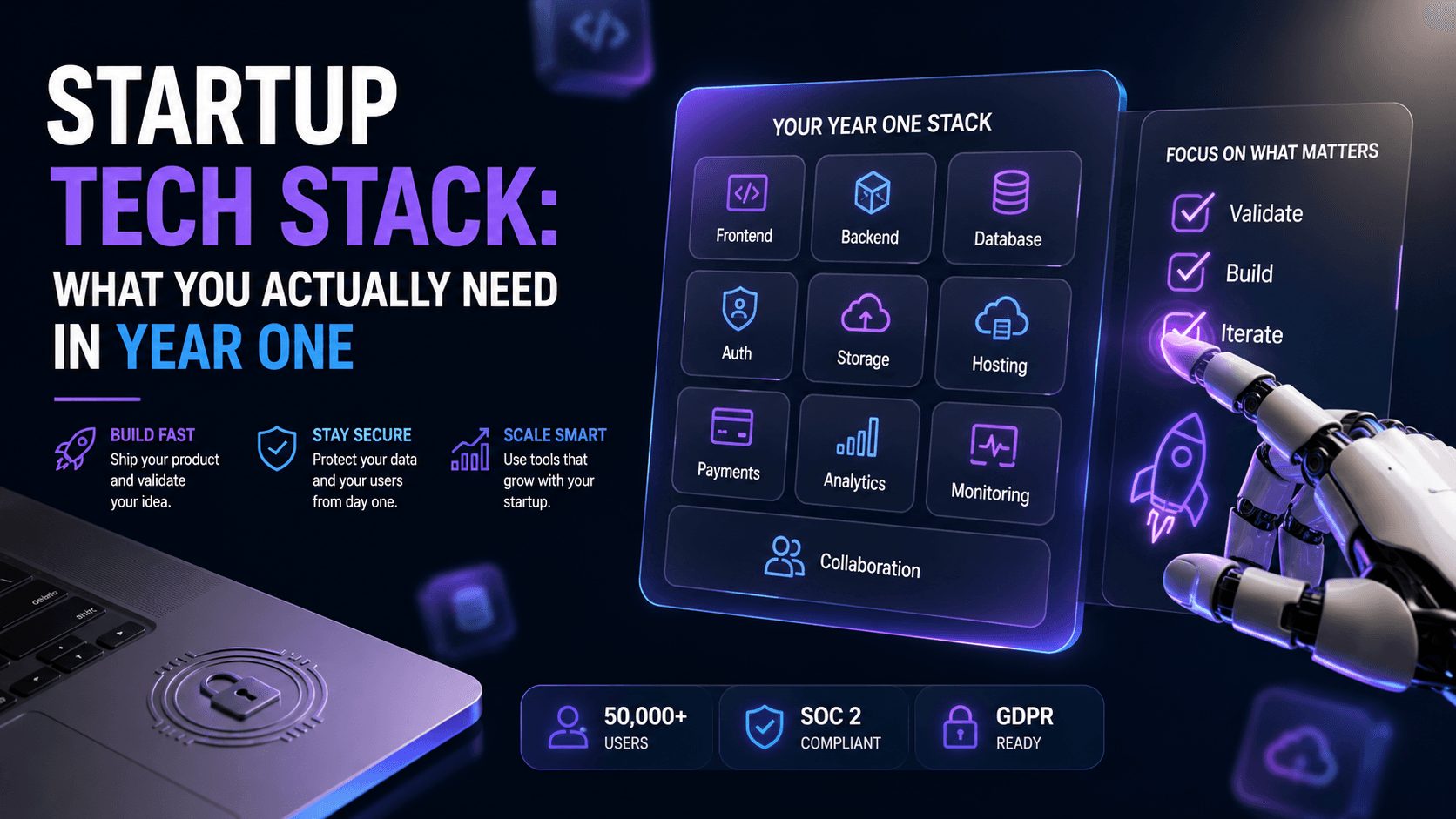
Founders often feel pressure to assemble an impressive, comprehensive tech stack early on, influenced by what more established companies use or what's currently trending in startup circles. In reality, year one calls for something much leaner - a stack built around validating your idea and serving early users well, not one designed for a scale you haven't reached yet. This blog breaks down what a startup actually needs in its first year, and what can reasonably wait.
Why Overbuilding Your Stack Early Is a Common Mistake
Adopting too many tools too early creates real costs beyond just subscription fees - added complexity, more systems to maintain, and time spent managing tools instead of building your actual product. A lean, purposeful stack in year one avoids this trap while still giving you what you genuinely need to operate and grow.
The Core Product Layer
At the center of most startups is the actual product - a website, web app, or mobile app development effort. In year one, this usually means:
- A technology choice that matches your team's actual expertise, not the trendiest option
- An architecture that supports your MVP without overengineering for scale you don't have yet
- A clear plan for how the product will evolve as you learn from real users
Overbuilding the product itself, before validating demand, is one of the most expensive mistakes a startup can make in its first year.
Hosting and Infrastructure
Reliable infrastructure matters, but year one doesn't require enterprise-level complexity. Core needs typically include:
- Cloud hosting that can scale as usage grows, without requiring a complete migration later
- Basic monitoring to catch downtime or performance issues early
- Straightforward backup and recovery practices to protect your data
Choosing infrastructure that can grow with you, without needing an early rebuild, is more important than choosing the most feature-rich option available.
A Simple, Reliable Database
Your data structure needs to support your core product functionality without unnecessary complexity. In year one, this usually means choosing a well-established, reliable database solution rather than something exotic or trend-driven, prioritizing stability and simplicity over hypothetical future needs you haven't encountered yet.
Basic Analytics and User Feedback Tools
Understanding how early users actually interact with your product is critical in year one. This typically requires:
- Basic usage analytics to see what features are actually being used
- A simple way to collect direct user feedback
- Enough visibility into user behavior to inform your next development priorities
Elaborate, enterprise-grade analytics platforms are usually unnecessary this early - the goal is learning, not sophisticated reporting.
Customer Communication Tools
Whether it's email, live chat, or a simple support inbox, having a straightforward way to communicate with early users matters significantly more than which specific tool you choose. In year one, simplicity and responsiveness matter more than a fully automated, scaled-up support system.
A Lightweight CRM or Lead Tracking System
Even early-stage startups benefit from tracking leads, early customers, and conversations in an organized way. A simple, off-the-shelf CRM is usually sufficient in year one - custom CRM development typically only becomes worthwhile once your sales process is established and genuinely unique.
Security Basics From Day One
Security shouldn't wait for later stages, even with a lean stack. Year one essentials include:
- Secure handling and storage of any user data you collect
- Basic authentication and access controls
- Following secure coding practices from the start, even in an MVP
Skipping security fundamentals early often creates far more expensive problems once real user data and trust are involved.
What Can Reasonably Wait Until Later
Not everything needs to be part of your year one stack. Common examples of what can wait include:
- Advanced AI automation features, until user behavior clearly shows where they'd add value
- Enterprise-level software systems built for a scale you haven't reached
- Highly customized internal tools that make more sense once your processes are established
- Native mobile apps, if a strong web presence or PWA can validate demand first
Planning for Growth Without Overbuilding Now
While year one should stay lean, it's worth choosing a foundation that can evolve without a costly rebuild. This is where thoughtful software development decisions early on - even within a minimal stack - pay off later, avoiding the need to replace core systems just as the startup starts gaining real traction.
Why This Requires Honest Prioritization, Not a Checklist
There's no universal "correct" startup tech stack - the right choices depend on your specific product, team expertise, and what you're actually trying to validate in year one. Resisting the pressure to adopt tools simply because other startups use them is often more valuable than any specific technology choice itself.
Frequently Asked Questions
Should a startup use custom software or off-the-shelf tools in year one?
Generally off-the-shelf tools for standard functions, reserving custom development for the core product and anything genuinely unique to how the business operates.
Is it a mistake to invest in advanced tools too early?
Often, yes. Overbuilding a tech stack before validating the core product adds unnecessary cost and complexity without a corresponding benefit at this stage.
Do startups need a mobile app in year one?
Not necessarily. Many startups validate demand through a strong web presence or PWA first, before investing in native mobile app development.
How important is security for an early-stage startup?
Very important, even at a small scale. Security fundamentals should be part of the stack from day one, not something addressed only once the startup grows.
How does a startup know what to add to its stack next after year one?
Real usage data and user feedback from year one typically reveal the next genuine priorities, rather than adding tools based on assumptions or industry trends.
Ready to Build the Right Stack for Year One?
The right tech stack for year one isn't the most impressive one - it's the one that helps you validate your idea and serve early users well, without unnecessary complexity. At Weboraz, we help startups make lean, honest technology decisions built for where they actually are, not where they hope to be someday. With a hybrid US-India team spanning software development, web development, mobile app development, and AI automation, we build the right foundation for your first year and beyond.
Get a free startup tech consultation from Weboraz and find out what your stack actually needs.
Frequently asked questions
Generally off-the-shelf tools for standard functions, reserving custom development for the core product and anything genuinely unique to how the business operates.
Often, yes. Overbuilding a tech stack before validating the core product adds unnecessary cost and complexity without a corresponding benefit at this stage.
Not necessarily. Many startups validate demand through a strong web presence or PWA first, before investing in native mobile app development.
Very important, even at a small scale. Security fundamentals should be part of the stack from day one, not something addressed only once the startup grows.
Real usage data and user feedback from year one typically reveal the next genuine priorities, rather than adding tools based on assumptions or industry trends.
Related Articles
Need help applying this?
Our team can turn the ideas in this article into a clear plan and a polished build.
Contact Us