

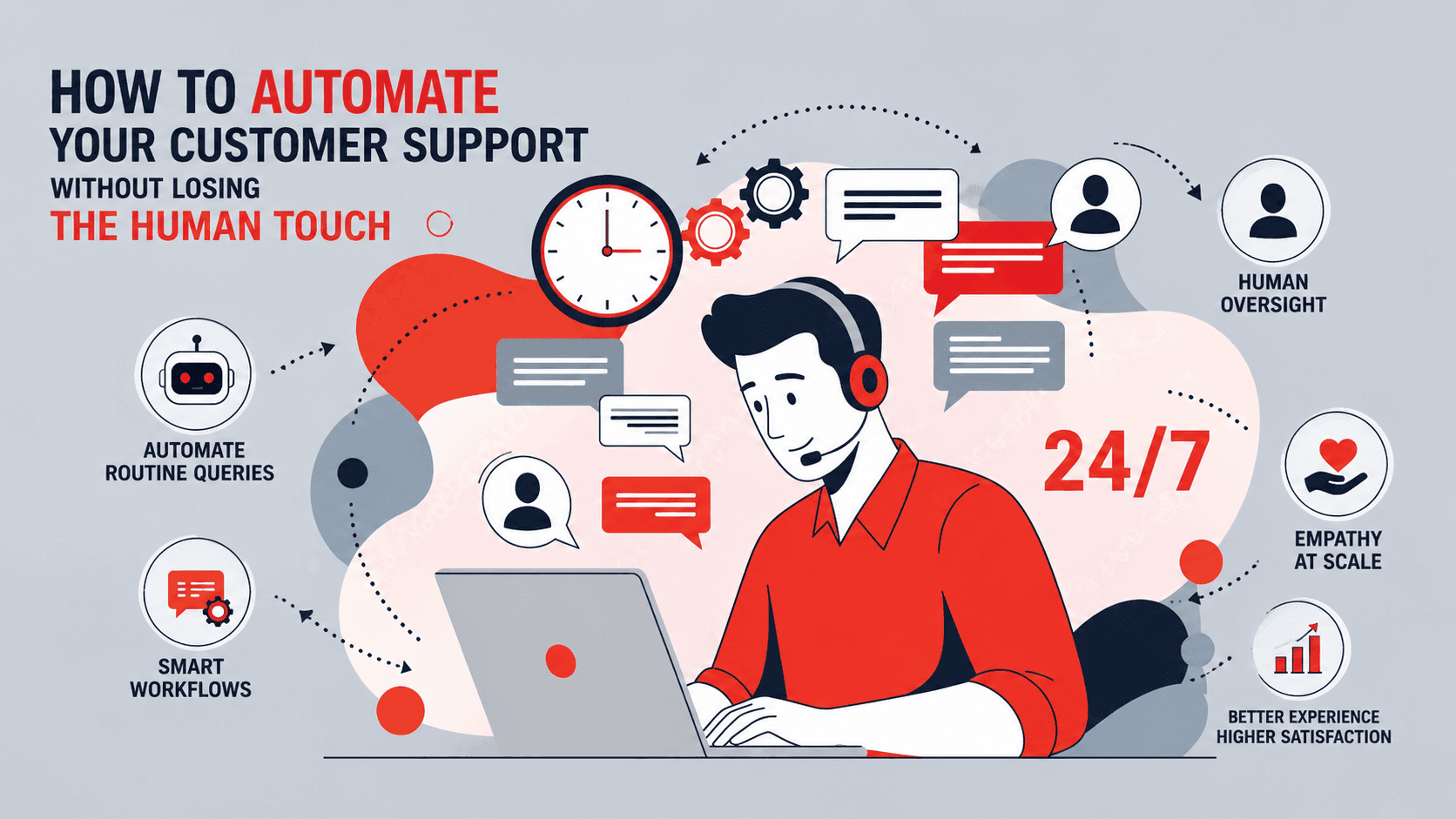
Businesses often approach support automation with a valid fear: that efficiency will come at the cost of feeling genuinely human, turning warm interactions into robotic, frustrating ones. That tradeoff isn't actually inevitable - it's usually a sign of automation implemented carelessly, not a necessary consequence of automating support at all. This blog walks through how to automate customer support in a way that genuinely preserves the human touch, rather than sacrificing it for speed.
Why the Fear of "Losing the Human Touch" Is Valid
Plenty of businesses have experienced frustrating automated support firsthand - rigid menus, chatbots that don't understand simple questions, or endless loops with no way to reach a real person. This fear isn't unfounded; it comes from real, common examples of automation done poorly, not from automation itself being inherently impersonal.
Start by Automating What Doesn't Need a Human Touch
The key to preserving the human element is being deliberate about what actually gets automated. Strong candidates include:
- Answering repetitive, factual questions like hours, pricing, or policies
- Order status and tracking updates
- Basic account information requests
- Simple scheduling or booking confirmations
These interactions don't lose anything by being automated, since they never required genuine empathy or judgment in the first place.
Reserve Human Interaction for What Actually Needs It
Just as important as what to automate is being clear about what should always reach a real person:
- Complaints or frustrated customers who need genuine empathy
- Complex or unusual situations that don't fit standard patterns
- Sensitive issues involving refunds, cancellations, or account problems
- Any interaction where a customer explicitly asks for a human
Automating these interactions is usually where the "robotic" feeling comes from most strongly, since these are exactly the moments customers need to feel heard, not processed.
Design the Handoff Carefully
One of the biggest sources of frustration isn't automation itself - it's a poor handoff between automated and human support. A well-designed handoff should:
- Recognize quickly when a query is beyond the automation's scope
- Pass along full context so customers don't have to repeat themselves
- Make it easy and fast to reach a human, without excessive gatekeeping
A smooth handoff often matters more to the overall experience than how sophisticated the automation itself is.
Write Conversational, Not Robotic, Responses
The actual language automated systems use plays a significant role in how human the experience feels. This means:
- Avoiding overly formal or stiff phrasing that sounds like a script
- Matching your brand's natural tone and voice
- Acknowledging the customer's situation before jumping straight to an answer
Small details in tone often make a bigger difference in perceived warmth than the underlying technology itself.
Use AI Automation to Personalize, Not Just Standardize
Modern AI automation can reference relevant account details, previous interactions, or context to make responses feel more attentive and specific to that customer, rather than generic and one-size-fits-all - this is a meaningful difference between older rigid chatbots and more thoughtfully built systems.
Always Make It Easy to Reach a Human
Regardless of how well automation works, customers should never feel trapped or gatekept from reaching a real person when they genuinely need one. Making the path to human support clear and accessible, rather than intentionally obscured, builds trust even when most interactions are handled automatically.
Monitor Real Conversations to Catch Where It's Falling Short
Ongoing review of actual automated interactions helps identify where the experience feels impersonal or frustrating, allowing for continuous refinement rather than assuming the initial setup will remain effective indefinitely.
Why the Underlying Build Matters for This Balance
Achieving this balance well typically requires more than a generic, off-the-shelf chatbot - it depends on solid software development that properly integrates context, business-specific nuance, and a well-designed handoff process, rather than a one-size-fits-all tool applied to every business the same way.
Measuring Success Beyond Just Efficiency
Businesses that get this balance right typically track more than resolution speed - they also monitor customer satisfaction and sentiment around automated interactions specifically, ensuring efficiency gains aren't quietly costing them customer trust and loyalty.
Frequently Asked Questions
Does automating customer support always make it feel less personal?
Not necessarily. Poorly implemented automation often does, but thoughtfully designed automation - with clear boundaries and smooth human handoffs - can maintain a genuinely human feel.
What types of support interactions should never be automated?
Complaints, sensitive issues, and complex situations requiring genuine empathy or judgment should generally always reach a human, rather than being handled entirely by automation.
How do I know if my automated support is feeling too robotic?
Reviewing real customer conversations and monitoring satisfaction specifically around automated interactions can reveal where tone or handoff issues are creating a frustrating experience.
Is it possible to personalize automated responses, or are they always generic?
Modern AI automation can reference account details and context to personalize responses meaningfully, rather than relying on generic, one-size-fits-all replies.
What's the most common mistake businesses make when automating support?
Making it difficult for customers to reach a human when they genuinely need one is one of the most common and damaging mistakes in support automation.
Ready to Automate Without Losing What Makes You, You?
The best support automation feels like an extension of your team, not a replacement for its warmth. At Weboraz, we help you automate the right things, in the right way, so efficiency and genuine care aren't a tradeoff. With a hybrid US-India team spanning AI automation, software development, and web development, we build support systems designed around your customers, not just your ticket volume.
Get a free support automation consultation from Weboraz and find out how to automate without losing your human edge.
Frequently asked questions
Not necessarily. Poorly implemented automation often does, but thoughtfully designed automation - with clear boundaries and smooth human handoffs - can maintain a genuinely human feel.
Complaints, sensitive issues, and complex situations requiring genuine empathy or judgment should generally always reach a human, rather than being handled entirely by automation.
Reviewing real customer conversations and monitoring satisfaction specifically around automated interactions can reveal where tone or handoff issues are creating a frustrating experience.
Modern AI automation can reference account details and context to personalize responses meaningfully, rather than relying on generic, one-size-fits-all replies.
Making it difficult for customers to reach a human when they genuinely need one is one of the most common and damaging mistakes in support automation.
Related Articles
Need help applying this?
Our team can turn the ideas in this article into a clear plan and a polished build.
Contact Us