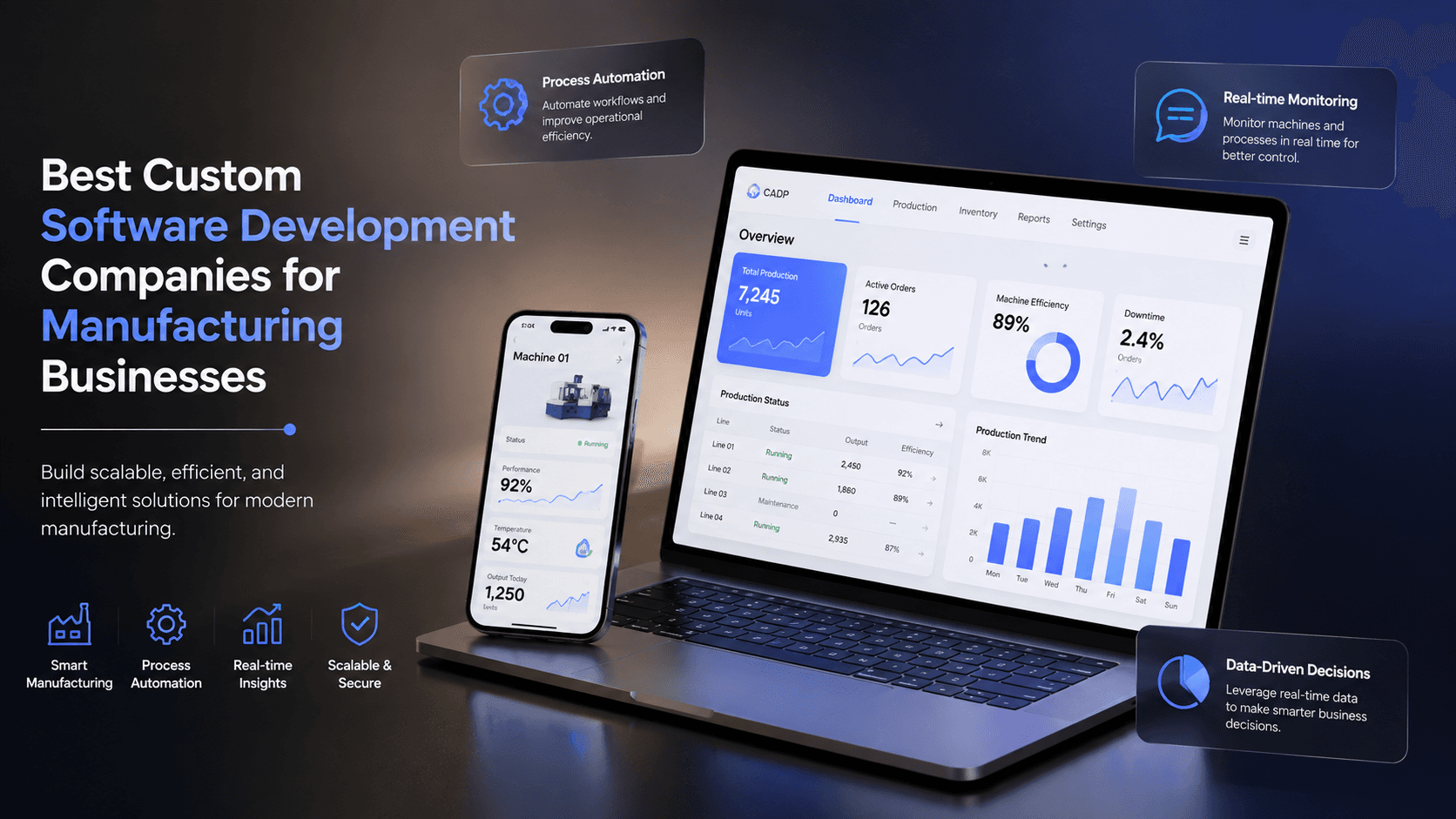
Choosing a software development partner is hard enough in the abstract, but manufacturing businesses face a specific version of the problem: most agencies are generalists, comfortable building a marketing website or a standard business app, but genuinely unfamiliar with how a production floor actually operates. That gap doesn't always show up in a sales pitch - it shows up six months into a project, when the delivered system doesn't reflect how your bills of materials, work orders, or quality processes actually work. This blog walks through how to evaluate development companies specifically for manufacturing work, so you can spot the difference before signing a contract, not after.
Why "Good at Software" Isn't the Same as "Good for Manufacturing"
A development agency can be technically excellent - clean code, solid process, strong communication - and still be a poor fit for a manufacturing project, simply because they've never worked with the specific realities of a production environment. General software competence doesn't automatically translate into understanding:
- How bills of materials structure inventory and production logic
- Why work-in-progress states matter more than simple "in stock / out of stock" thinking
- How shop floor data collection differs from typical office software input
- Why quality data needs to trace back to specific production runs, not sit in a separate log
Questions to Ask a Potential Development Partner
Beyond a standard vendor evaluation, it's worth pressing specifically on manufacturing context:
- Have they built systems involving production scheduling, inventory tied to bills of materials, or shop floor data collection before?
- Can they speak concretely about the difference between discrete and process manufacturing, and how that affects system design?
- Do they understand quality control workflows well enough to design traceability into the system, not bolt it on afterward?
- Have they integrated with shop floor equipment or instrumentation, or only ever built office-facing software?
Vague, generic answers to these questions - even from an otherwise polished vendor - are a meaningful signal.
Portfolio Signals Worth Looking For
Rather than taking a portfolio at face value, look specifically for:
- Projects involving production tracking, inventory tied to manufacturing logic, or quality systems, not just general business dashboards
- Evidence of integration work with equipment, sensors, or legacy industrial systems, since this is often the hardest and most differentiating part of manufacturing projects
- References from manufacturing clients specifically, not just adjacent industries assumed to be similar
Why Process Understanding Matters More Than Technology Choices
It's tempting to evaluate vendors primarily on their tech stack, but for manufacturing projects, understanding your actual process matters more than which framework they prefer. A partner who asks detailed, specific questions about how your production actually flows - sequencing, capacity constraints, quality checkpoints - during early conversations is showing you exactly the kind of diligence that predicts a system built around your reality, not a generic template.
Red Flags Specific to Manufacturing Software Projects
A few patterns are worth treating as warning signs specifically in this context:
- A vendor proposing a generic ERP customization without asking detailed questions about your bill-of-materials structure
- No prior experience connecting software to actual shop floor equipment or data sources
- Underestimating the complexity of production scheduling, treating it like a simple task list or calendar
- No clear plan for how quality and traceability data will be structured and connected to production runs
Evaluating Communication and Process Fit
Beyond manufacturing-specific expertise, standard evaluation criteria still matter: clear communication cadence, transparent project management, and a development process that includes proper testing before anything touches a live production environment. A manufacturing project that goes live with bugs isn't just inconvenient - it can disrupt actual physical production, which raises the stakes of quality assurance considerably above a typical software project.
Why a Discovery-First Approach Matters Here
Manufacturing operations are specific enough that a strong partner should insist on a genuine discovery phase before proposing a solution, rather than pitching a pre-packaged answer immediately. Through proper Custom Software Development, that discovery process is what surfaces the details - your specific bill-of-materials logic, your actual quality workflow, your equipment mix - that ultimately determine whether the resulting system fits your operation or requires expensive rework later.
How Related Capabilities Factor Into the Decision
Depending on your specific needs, it's also worth evaluating a potential partner's experience with ERP Solutions if production planning and inventory are central to the project, or AI Automation if predictive maintenance or demand forecasting are part of your roadmap. A partner strong in general software development but thin in these adjacent areas may still be a reasonable fit for a narrower project, but less so for a broader manufacturing platform.
Making the Final Decision
Once you've narrowed to a shortlist, the clearest differentiator is often how specifically a vendor discusses your actual operation in follow-up conversations - do they reference details from your discovery discussions accurately, or do their proposals still read like a generic manufacturing pitch? That specificity is usually the most reliable predictor of how the actual project will go.
Related Services
- Custom Software Development - the core capability behind manufacturing-specific system builds
- ERP Solutions - relevant when production planning and inventory are central to the project
- AI Automation - relevant for predictive maintenance or demand forecasting needs
- Mobile App Development - relevant when shop floor mobile access is part of the scope
Related Blogs
- How to Choose the Right Custom Software Development Partner
- Software Development RFP Template and How to Evaluate Vendor Proposals
- IoT Application Development for Smart Manufacturing and Connected Devices
Frequently Asked Questions
What's the biggest mistake manufacturers make when choosing a software development partner?
Evaluating primarily on general technical skill or price, without probing specifically for manufacturing process understanding, which tends to surface as costly misalignment later in the project.
Should I only consider vendors with manufacturing-specific portfolio work?
It's a strong positive signal, but not strictly required - what matters more is whether they ask detailed, specific questions about your actual process during early conversations, regardless of past portfolio labels.
How important is a discovery phase for a manufacturing software project?
Very important. Manufacturing operations are specific enough that a partner proposing a solution without a genuine discovery phase is likely working from generic assumptions, not your actual process.
What questions should I ask about shop floor integration specifically?
Ask whether they've connected software to actual equipment or sensors before, not just built office-facing dashboards, since this integration work is often the hardest and most differentiating part of these projects.
Is price or manufacturing expertise more important when choosing a vendor?
Manufacturing-specific expertise tends to matter more, since a lower-cost vendor unfamiliar with production realities often costs more overall once rework and misalignment are factored in.
Evaluating Partners for Your Manufacturing Software Project?
Choosing the wrong development partner for a manufacturing project usually doesn't show up until well into the build, once assumptions about your production process turn out to be wrong. Weboraz starts every manufacturing engagement with real discovery into your actual bills of materials, workflows, and quality processes, rather than proposing a generic system. Contact Us to talk through what your evaluation process should be looking for.
Frequently asked questions
Evaluating primarily on general technical skill or price, without probing specifically for manufacturing process understanding, which tends to surface as costly misalignment later in the project.
It's a strong positive signal, but not strictly required — what matters more is whether they ask detailed, specific questions about your actual process during early conversations, regardless of past portfolio labels.
Very important. Manufacturing operations are specific enough that a partner proposing a solution without a genuine discovery phase is likely working from generic assumptions, not your actual process.
Ask whether they've connected software to actual equipment or sensors before, not just built office-facing dashboards, since this integration work is often the hardest and most differentiating part of these projects.
Manufacturing-specific expertise tends to matter more, since a lower-cost vendor unfamiliar with production realities often costs more overall once rework and misalignment are factored in.
Related Articles

Need help applying this?
Our team can turn the ideas in this article into a clear plan and a polished build.
Contact Us