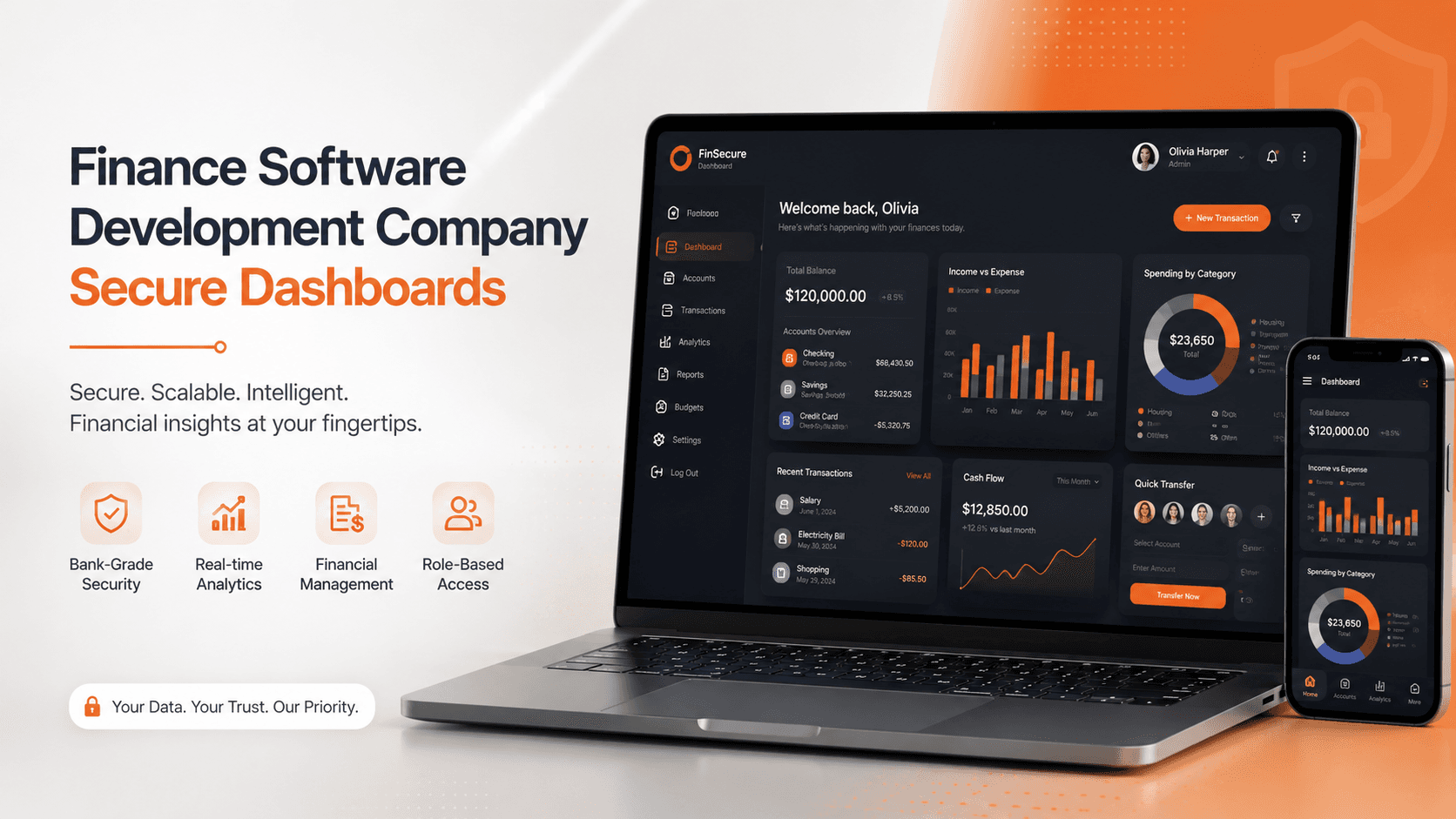
Finance and accounting firms sit in an unusual position: they handle some of their clients' most sensitive data, operate under real compliance obligations, and still often run day-to-day operations on a patchwork of generic accounting software, spreadsheets, and email threads for client communication. That patchwork tends to work until a firm grows past a certain size, at which point the manual reconciliation and scattered client requests start consuming real time that should go toward client work. This blog looks at what custom finance and accounting software development actually involves, from secure client dashboards to reporting and workflow automation.
Why Generic Accounting Software Often Isn't Enough for the Firm Itself
Standard accounting platforms are typically built to help a business manage its own books, not to support a firm serving many clients with distinct workflows, deliverables, and reporting needs. Firms often find themselves working around this gap through:
- Manually pulling and reformatting client-specific reports from a generic accounting tool
- Email threads and shared spreadsheets standing in for a proper client workflow system
- No centralized, secure place for clients to access their own reports or documents
- Difficulty maintaining consistent audit trails across scattered communication channels
For firms with a small, stable client base, this can remain manageable. As a firm grows, the manual overhead tends to scale right alongside client count, eventually consuming time that should go toward billable work.
What a Secure Client Dashboard Actually Needs to Do
A client-facing financial dashboard needs to balance clarity with genuine security, typically including:
- Real-time or near-real-time visibility into the specific financial data relevant to that client
- Secure, role-based access so each client sees only their own data, with appropriate internal staff visibility layered on top
- Clear presentation of key financial metrics without requiring the client to interpret raw accounting data themselves
- Document access for reports, statements, or filings relevant to that specific client relationship
Building Dashboards Around Your Firm's Actual Reporting Structure
Through dedicated Custom Software Development, a dashboard can be architected specifically around how your firm actually structures client reporting, rather than adapted from a generic business intelligence template that assumes a single-entity view. This typically includes:
- Reporting logic reflecting your firm's actual chart-of-accounts conventions and client reporting standards
- Multi-entity or multi-client views for clients managing several businesses or accounts under one relationship
- Custom KPI definitions matching how your firm and your clients actually think about financial performance, not a generic default
Client Workflow Automation Beyond the Dashboard
Beyond reporting, a meaningful part of a finance firm's operational load involves recurring client workflows - document collection, approval steps, filing deadlines, engagement tracking. AI Automation can meaningfully reduce this manual burden, including:
- Automated reminders for document submission or upcoming deadlines
- Workflow tracking that shows exactly where each client engagement stands
- Anomaly detection flagging unusual transactions or discrepancies for review
- Automated report generation for routine, recurring client deliverables
Security and Compliance Are Foundational, Not Optional
Finance and accounting software handles sensitive financial and personal data, which makes secure architecture and regulatory compliance a non-negotiable part of development, including:
- Encryption for data both in transit and at rest
- Role-based access controls with detailed audit logging of who accessed what data and when
- Secure authentication, including support for multi-factor authentication for client and staff access
- Architecture built with relevant financial data protection and regulatory requirements in mind from the start
Building these considerations into the system from the outset avoids the far more disruptive process of retrofitting security architecture after a gap is discovered during an audit or client due diligence review.
Integration With Existing Accounting and Practice Management Systems
Firms rarely want to abandon their existing accounting software entirely - more often, the goal is connecting it to a better client-facing layer and internal workflow system. A meaningful part of this work involves building integrations that let existing accounting platforms share data accurately with a custom dashboard or workflow system, rather than requiring manual data entry in two places.
Multi-Entity and Multi-Client Complexity
Firms serving clients with multiple entities, subsidiaries, or complex ownership structures often find generic tools particularly limiting, since consolidated reporting across entities isn't a standard feature most accounting software handles well. Custom development allows this consolidation logic to be built precisely around how your specific clients' financial structures actually work.
Mobile Access for Firm Staff and Clients
Both internal staff and clients increasingly expect to check status, review reports, or approve documents from a phone, not just a desktop portal. Through Mobile App Development, this can extend dashboard access and workflow approvals to mobile devices, reducing the friction of needing to be at a specific workstation to check on an engagement's status.
Making the Case for Custom Finance and Accounting Software
Custom development tends to deliver the strongest value when:
- Your firm's client reporting or workflow needs have outgrown what generic accounting software supports natively
- Manual reformatting, reconciliation, or client communication is consuming significant staff time
- Security or compliance requirements demand more precise control than a generic platform offers
- Multi-entity or complex client structures require consolidation logic generic tools don't handle well
For smaller firms with straightforward client needs, existing accounting software paired with standard client communication tools may remain the more practical choice.
Related Services
- Custom Software Development - architecting secure dashboards and reporting around your firm's actual structure
- AI Automation - powering workflow automation, reminders, and anomaly detection
- Mobile App Development - extending dashboard and workflow access to staff and clients on mobile
- API Integration - connecting existing accounting platforms to a custom dashboard or workflow system
Related Blogs
- App Security Best Practices Every Founder Should Know
- Software Integration 101: Making Your Tools Work Together
- Custom LIMS (Laboratory Information Management System) Development for Labs and Diagnostics
Frequently Asked Questions
Why do finance and accounting firms outgrow generic accounting software?
Generic accounting platforms are built to help a business manage its own books, not to support a firm serving many clients with distinct reporting, workflow, and security needs, which becomes a real constraint as a firm grows.
How is a secure client dashboard different from just sharing reports by email?
A secure dashboard provides role-based, controlled access to real-time data with proper audit trails, replacing the security and consistency gaps that come with emailing spreadsheets or PDF reports individually.
Can custom finance software integrate with our existing accounting platform?
Yes, and this is often central to the approach - connecting existing accounting software to a custom dashboard or workflow layer, rather than replacing it entirely.
What security measures are essential for finance and accounting software?
Encryption, role-based access controls, detailed audit logging, and secure authentication are foundational requirements, given the sensitivity of the financial and personal data these systems handle.
Is custom software only worth it for large accounting firms?
Not necessarily. It tends to make sense once manual reporting, reconciliation, or client communication overhead starts consuming significant staff time, regardless of firm size.
Considering Custom Software for Your Finance or Accounting Firm?
If your team is still reformatting reports manually or managing client requests through email threads, that's usually a sign the firm has outgrown its current tools. Weboraz builds secure dashboards, reporting systems, and client workflow tools architected around how your firm actually operates, with security and compliance built in from the start. Contact Us to talk through what a system built for your firm's client base would involve.
Frequently asked questions
Generic accounting platforms are built to help a business manage its own books, not to support a firm serving many clients with distinct reporting, workflow, and security needs, which becomes a real constraint as a firm grows.
A secure dashboard provides role-based, controlled access to real-time data with proper audit trails, replacing the security and consistency gaps that come with emailing spreadsheets or PDF reports individually.
Yes, and this is often central to the approach - connecting existing accounting software to a custom dashboard or workflow layer, rather than replacing it entirely.
Encryption, role-based access controls, detailed audit logging, and secure authentication are foundational requirements, given the sensitivity of the financial and personal data these systems handle.
Not necessarily. It tends to make sense once manual reporting, reconciliation, or client communication overhead starts consuming significant staff time, regardless of firm size.
Related Articles

Need help applying this?
Our team can turn the ideas in this article into a clear plan and a polished build.
Contact Us