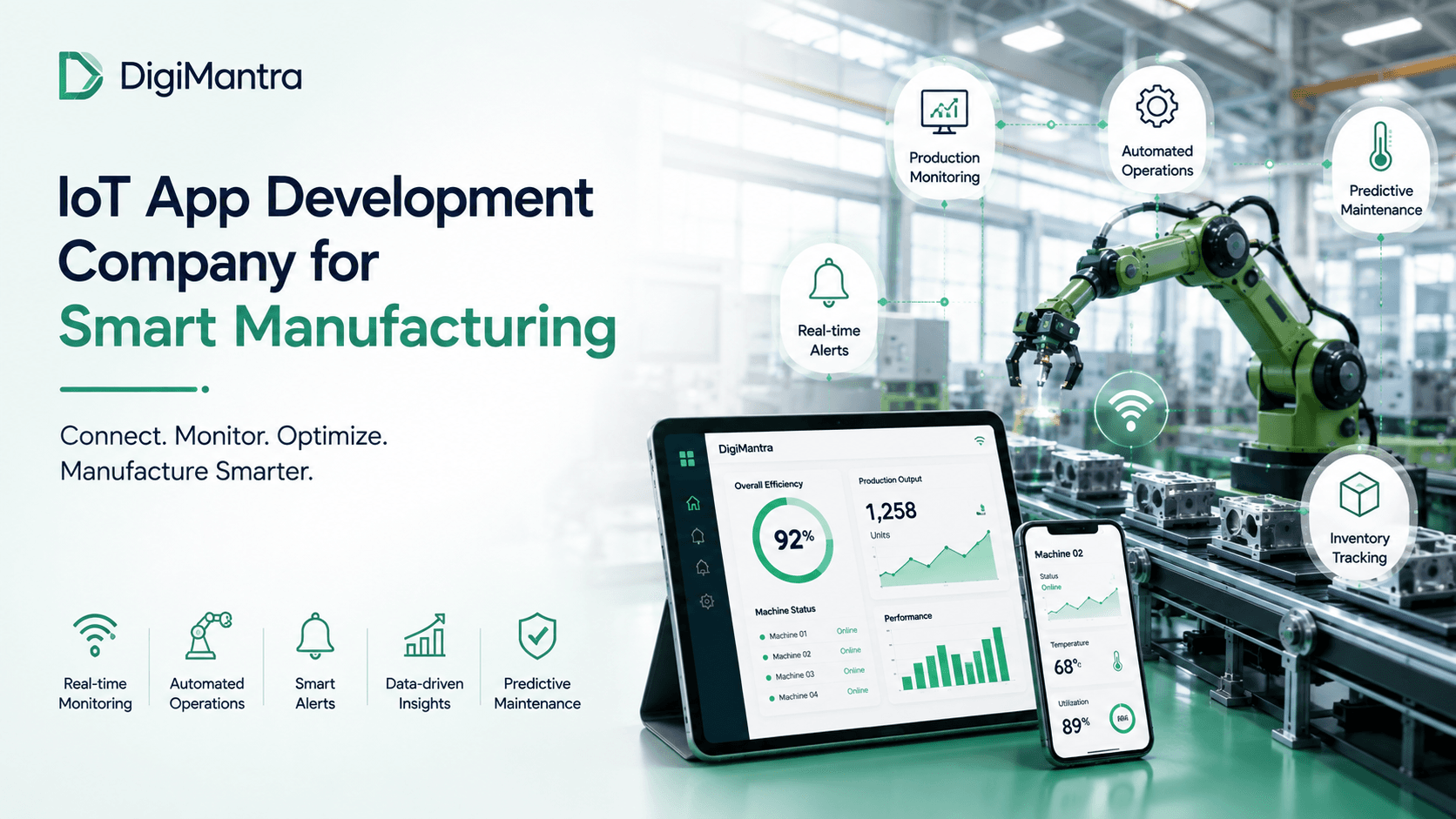
Most manufacturing businesses considering an IoT project aren't starting from zero - they already have sensors, PLCs, or equipment capable of generating meaningful operational data. What's usually missing is the software layer that collects, normalizes, and presents that data in a way people can actually act on. This blog looks at what IoT application development actually involves for smart manufacturing and connected devices, and what it takes to turn existing hardware into a genuinely useful software system.
What "IoT Application" Actually Means in a Manufacturing Context
An IoT application isn't just a dashboard - it's the full software layer connecting physical devices to usable business intelligence, typically including:
- Data collection from sensors, PLCs, and equipment across the facility
- Normalization of that data, since different equipment and legacy protocols rarely speak the same format natively
- Storage and processing infrastructure that can handle continuous, high-volume data streams
- Presentation layers - dashboards, alerts, reports - that turn raw data into decisions people can actually make
The complexity isn't in any single piece; it's in reliably connecting all of them across equipment that was often never designed with modern connectivity in mind.
Why Industrial IoT Differs From Consumer IoT
Generic consumer IoT tools rarely translate well to a manufacturing environment, since industrial settings carry requirements consumer platforms weren't built around:
- Strict latency and reliability requirements, where a missed signal can mean unplanned downtime
- Legacy equipment using older communication protocols that need to be bridged, not replaced
- Noisy, high-volume data streams from equipment running continuously, not intermittently
- Safety and compliance considerations specific to industrial environments
This is why custom development, rather than adapting a consumer smart-home platform, tends to be necessary for genuine industrial IoT applications.
What Custom IoT Development Actually Involves
Through dedicated Custom Software Development, an IoT application can be architected specifically around your actual equipment mix, facility layout, and operational priorities, rather than adapted from a generic IoT platform template. This typically includes:
- Device and sensor integration tailored to your specific equipment, including legacy machinery with older protocols
- Data pipelines that normalize and process incoming data reliably at scale
- Custom dashboards showing the specific metrics your operations team actually needs to see
- Alerting logic tuned to what genuinely constitutes an actionable issue on your factory floor, not a generic threshold
Bridging Legacy Equipment Into a Modern IoT System
One of the most common technical challenges in industrial IoT projects is connecting equipment that was never designed for modern connectivity. Rather than requiring a full equipment replacement, custom development can often bridge legacy machinery through:
- Retrofit sensors added to existing equipment to capture relevant operational data
- Protocol translation layers that normalize data from older industrial communication standards
- Edge computing components that process data locally before sending it upstream, reducing bandwidth and latency concerns
Real-Time Monitoring and Predictive Maintenance
Once equipment is properly connected, the software layer can move beyond basic monitoring into genuinely predictive territory through AI Automation, including:
- Predictive maintenance alerts based on equipment sensor patterns, flagging likely failures before they cause downtime
- Anomaly detection across equipment performance data, surfacing issues that wouldn't be obvious from a simple threshold alert
- Production optimization insights based on real operational data rather than assumptions
- Automated quality control flagging based on sensor or inline inspection data
These capabilities depend directly on having reliable, well-structured data flowing from connected equipment in the first place - which is why the underlying integration work matters as much as the intelligence layer built on top of it.
Data Infrastructure That Can Handle Industrial Scale
Manufacturing environments generate substantial continuous data volume, which requires infrastructure genuinely built to handle it:
- Scalable data storage that can grow with additional connected equipment over time
- Processing architecture that keeps pace with real-time data streams without introducing lag
- Redundancy and reliability measures appropriate for mission-critical operational visibility
Underbuilding this layer tends to produce a system that works fine in a pilot but struggles once deployed across a full facility.
Mobile and Remote Access for Operations Teams
Plant managers and maintenance teams increasingly need visibility away from a fixed control room. Through Mobile App Development, this can mean real-time alerts and dashboard access on mobile devices, letting relevant staff respond to equipment issues wherever they actually are on the floor, rather than requiring a return to a central workstation.
Security Considerations for Connected Industrial Systems
Connecting industrial equipment to networked software introduces security considerations that shouldn't be an afterthought, including secure device authentication, network segmentation between operational and IT systems, and ongoing monitoring for unusual device behavior that might indicate a security issue rather than a mechanical one.
Making the Case for Custom IoT Development
Custom IoT application development tends to deliver the strongest value when:
- Your equipment mix includes legacy machinery that generic platforms don't support well
- Predictive maintenance or production optimization would meaningfully reduce downtime or waste
- Existing manual monitoring processes are creating real operational risk or inefficiency
- You need dashboards and alerts reflecting your actual operational priorities, not a generic template
Related Services
- Custom Software Development - architecting device integration and data pipelines around your actual equipment
- AI Automation - powering predictive maintenance, anomaly detection, and quality flagging
- Mobile App Development - extending real-time visibility to plant and maintenance teams
- Web Development - building the dashboards and reporting interfaces operations teams rely on
Related Blogs
- Legacy System Modernization: When and How to Upgrade
- Software Integration 101: Making Your Tools Work Together
- App Security Best Practices Every Founder Should Know
Frequently Asked Questions
Why can't we use a generic consumer IoT platform for our manufacturing facility?
Consumer platforms aren't built for the strict latency, legacy protocol support, and high-volume continuous data streams that industrial environments require, which is why custom development is typically necessary.
Do we need to replace our existing equipment to add IoT capability?
Not necessarily. Legacy equipment can often be bridged through retrofit sensors and protocol translation layers, connecting existing machinery without a full replacement.
How does AI improve an IoT system beyond basic monitoring?
AI can add predictive maintenance alerts, anomaly detection, and production optimization insights based on real operational data, moving the system beyond simple threshold-based monitoring.
Is IoT application development only worth it for large manufacturing operations?
Not necessarily. It tends to make sense once manual monitoring processes create real operational risk, or when predictive maintenance would meaningfully reduce downtime, regardless of facility size.
What security considerations apply to industrial IoT systems?
Secure device authentication, network segmentation between operational and IT systems, and ongoing monitoring for unusual device behavior are all important, since connected equipment introduces new security surface area.
Ready to Connect Your Equipment to Usable Software?
If your equipment is already generating data that nobody's really using, that's usually the clearest sign an IoT software layer would pay for itself quickly. Weboraz builds industrial IoT applications architected around your actual equipment mix, including legacy machinery, with predictive intelligence layered in once the data foundation is solid. Contact Us to talk through what an IoT system built for your facility would actually involve.
Frequently asked questions
Consumer platforms aren't built for the strict latency, legacy protocol support, and high-volume continuous data streams that industrial environments require, which is why custom development is typically necessary.
Not necessarily. Legacy equipment can often be bridged through retrofit sensors and protocol translation layers, connecting existing machinery without a full replacement.
AI can add predictive maintenance alerts, anomaly detection, and production optimization insights based on real operational data, moving the system beyond simple threshold-based monitoring.
Not necessarily. It tends to make sense once manual monitoring processes create real operational risk, or when predictive maintenance would meaningfully reduce downtime, regardless of facility size.
Secure device authentication, network segmentation between operational and IT systems, and ongoing monitoring for unusual device behavior are all important, since connected equipment introduces new security surface area.
Related Articles
Need help applying this?
Our team can turn the ideas in this article into a clear plan and a polished build.
Contact Us