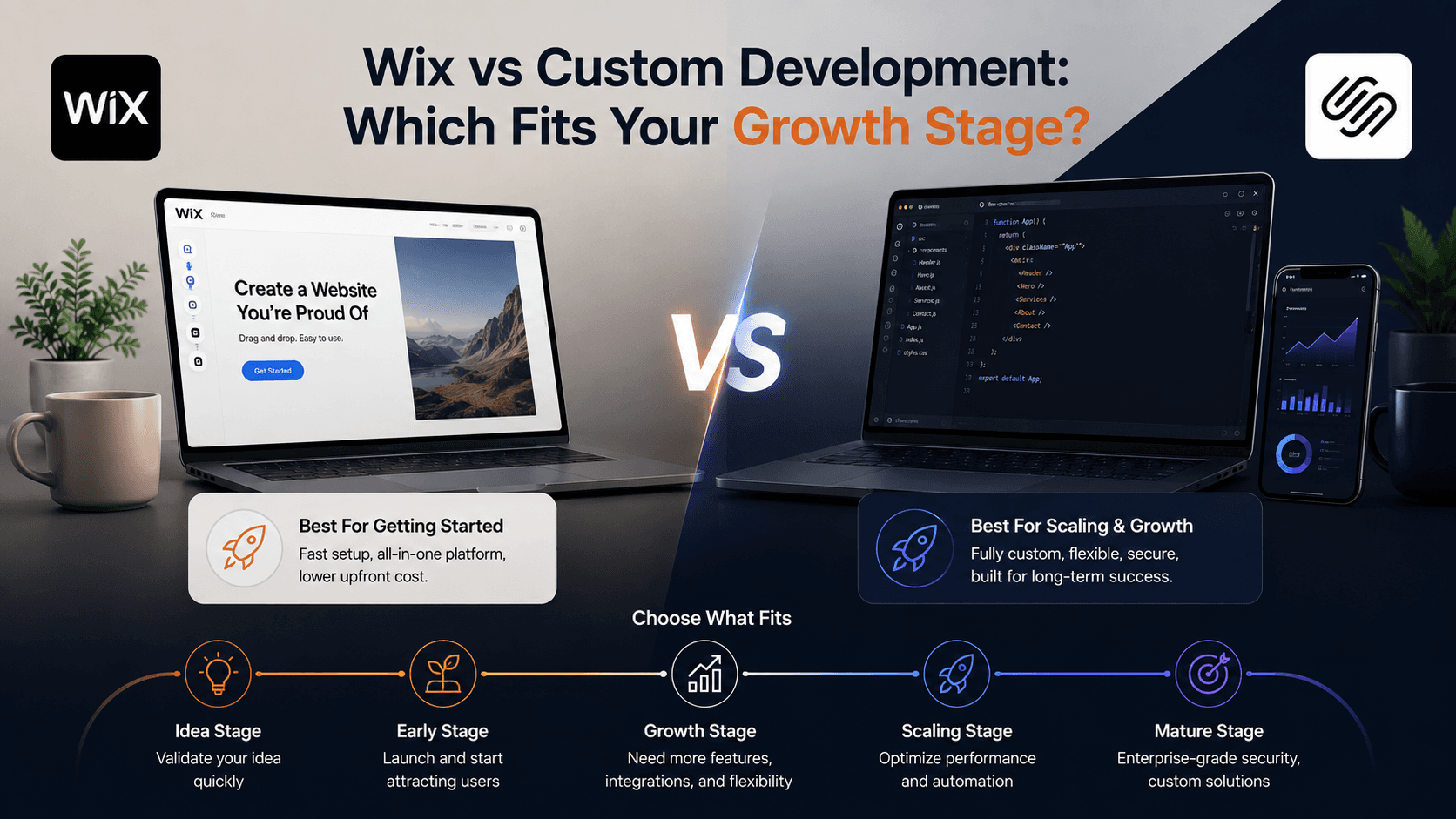
Choosing between Shopify and custom e-commerce development often comes down to a familiar tension: speed and simplicity versus flexibility and control. Both can power a genuinely successful online store, but they get there through very different tradeoffs, and the right choice depends more on your specific business needs than on which option sounds more advanced. This blog breaks down the real pros and cons of each, so you can decide with a clear picture of what you're actually choosing between.
What Shopify Is Built For
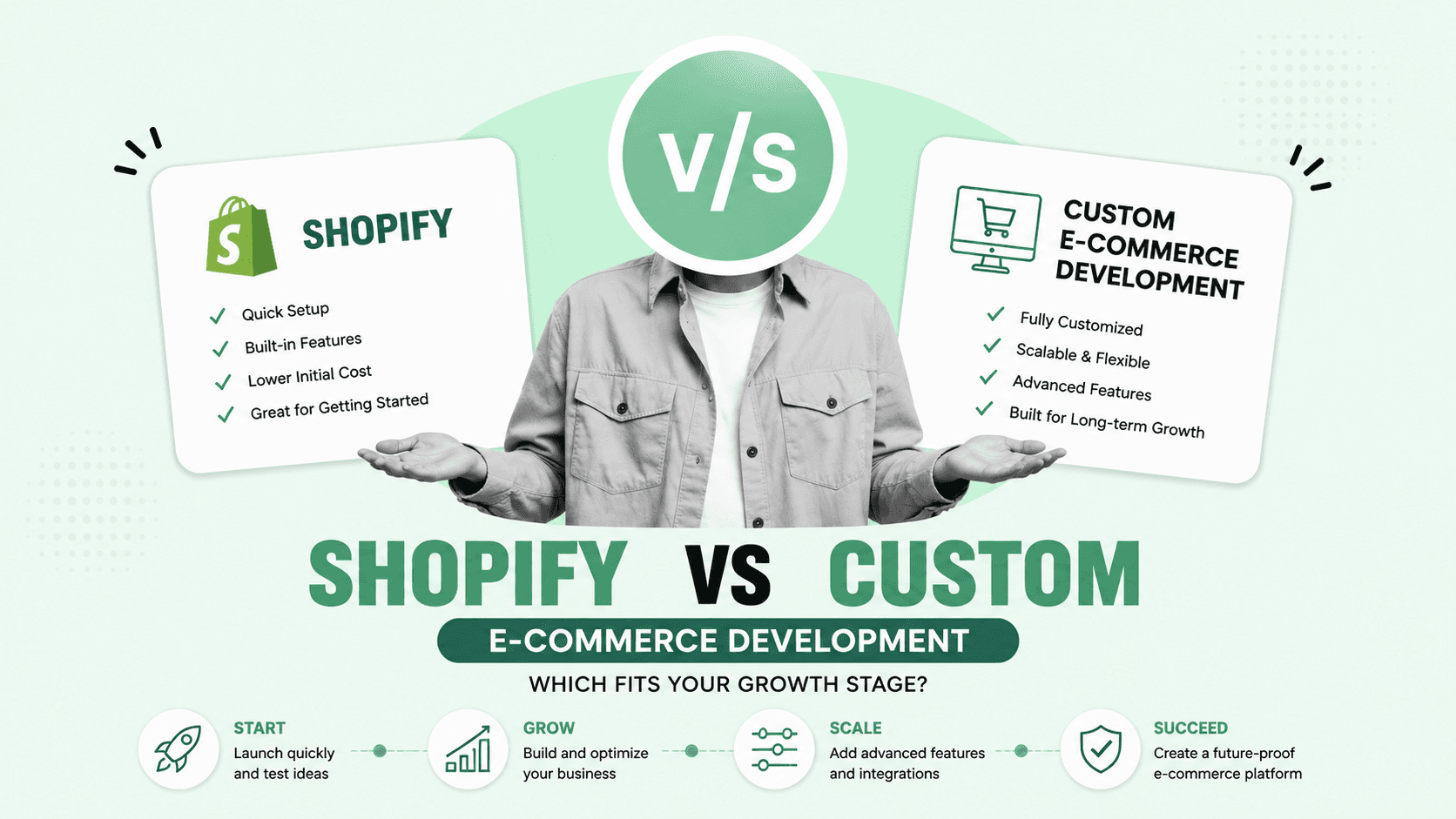
Shopify is a hosted e-commerce platform designed to get online stores up and running quickly, with built-in tools for products, payments, and order management.
Pros:
- Fast to launch, often within days rather than months
- Built-in payment processing, security, and hosting handled for you
- A large app ecosystem for adding common functionality
- Lower upfront cost compared to a custom build
- Well-documented and widely supported, with extensive existing resources
Cons:
- Ongoing subscription and transaction fees that scale with your business
- Customization limited by the platform's themes and app ecosystem
- Less control over performance optimization compared to a custom build
- Can become costly as more premium apps are added to work around limitations
What Custom E-commerce Development Is Built For
Custom e-commerce development means building your online store from the ground up, tailored specifically to your catalog, workflows, and growth plans, through dedicated software development.
Pros:
- Complete control over functionality, design, and user experience
- No recurring platform or transaction fees tied to a third-party provider
- Built specifically around your unique business logic, not a generic template
- Greater flexibility for performance optimization and technical SEO
- Easier to integrate deeply with other custom systems your business relies on
Cons:
- Higher upfront investment and longer development timeline
- Requires an experienced development partner for ongoing maintenance
- More responsibility for hosting, security, and infrastructure decisions
- Slower initial launch compared to signing up for an existing platform
The Core Tradeoff in Plain Terms
Shopify trades long-term flexibility and fee-free scaling for speed and simplicity upfront. Custom development trades a longer, more involved build process for a store built precisely around your business, without platform-imposed limitations or ongoing transaction fees.
When Shopify Is Genuinely the Better Choice
Shopify tends to be the right choice when:
- You're launching a new store and need to get to market quickly
- Your catalog and workflow are relatively standard
- You don't yet have the budget or need for a custom build
- You want to manage the store yourself without relying heavily on a developer
When Custom Development Becomes the Smarter Investment
Custom e-commerce development tends to deliver stronger value when:
- Your product catalog or business logic doesn't fit Shopify's standard structure well
- Transaction fees have become a significant, growing cost as sales scale
- You need deep integrations with other custom software development your business relies on
- Performance, technical SEO, or highly specific functionality are critical to your business
- You've hit real limitations trying to achieve your goals within Shopify's ecosystem
Cost Considerations Beyond the Sticker Price
Shopify's pricing looks predictable upfront, but transaction fees, premium app costs, and higher-tier plans can add up meaningfully as a store scales. Custom development requires a larger initial investment, but without the same ongoing transaction fees, which can make it more cost-effective for higher-volume stores over the long run.
Performance and Technical SEO Differences
As stores scale, page speed and technical SEO become more important to overall performance. Custom development allows for deeper technical optimization than Shopify's theme-based structure typically supports, which can matter significantly once organic traffic and conversion rates carry real business weight.
A Common Middle Path
Some businesses start on Shopify to validate their product and sales process, then transition to custom e-commerce development once their catalog, volume, or unique requirements have outgrown what the platform comfortably supports - using the early stage to learn exactly what a custom build would need to solve.
Where AI Automation Fits Into Either Option
Shopify offers app-based AI features for things like product recommendations or automated support, while custom e-commerce development allows AI automation to be built precisely around your specific catalog and customer behavior, offering a more tailored level of personalization than a generic app typically provides.
Frequently Asked Questions
Is Shopify a bad choice for a growing e-commerce business?
Not at all. Shopify works well for many growing businesses — it becomes a limitation mainly when catalog complexity, fees, or specific functionality needs genuinely exceed what the platform supports.
Are Shopify's transaction fees a significant cost over time?
They can be, especially for higher-volume stores, since fees scale directly with sales, unlike a custom build which doesn't carry the same ongoing transaction cost structure.
Can I move from Shopify to a custom e-commerce site later?
Yes, and many businesses do this once their needs outgrow the platform, though it typically involves a fresh build rather than a direct migration of the underlying structure.
Is custom e-commerce development only for large businesses?
No, though it tends to make more financial sense once sales volume or specific functionality needs justify the higher upfront investment compared to Shopify's fee structure.
Which option is better for SEO performance?
Custom development generally allows for deeper technical SEO optimization, though many businesses achieve strong SEO results on Shopify as well, depending on how it's configured.
Ready to Find Out Which Fits Your Store?
Shopify versus custom development isn't about which is objectively better -it's about which one fits your catalog, volume, and growth plans right now. At Weboraz, we help you make that call honestly, based on your actual e-commerce needs. With a hybrid US-India team spanning web development, software development, and AI automation, we build the right e-commerce solution for where your business actually is.
Get a free e-commerce strategy consultation from Weboraz and find out which platform fits your store.