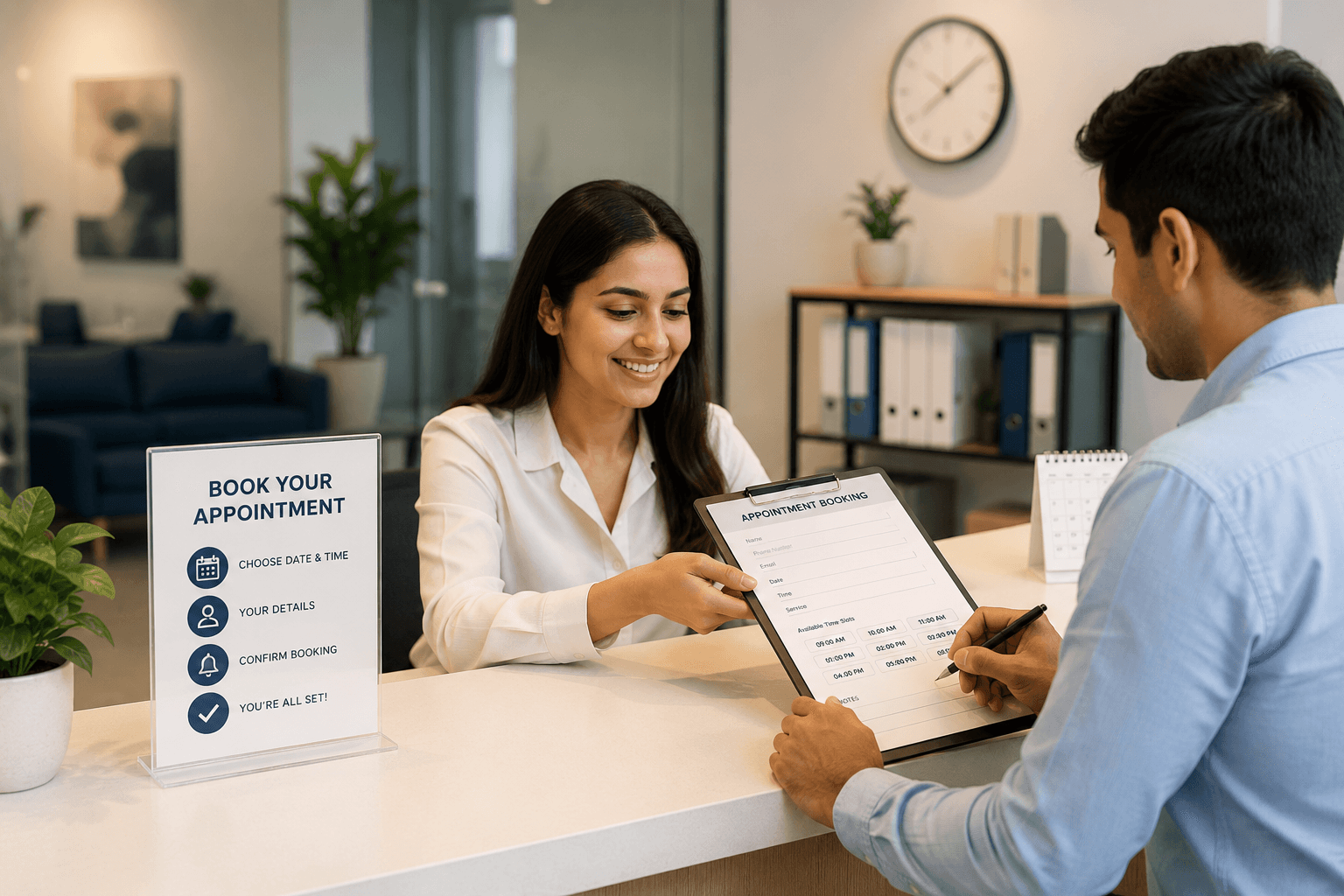
Every appointment-driven business - clinics, salons, consultancies, fitness studios - eventually hits the same operational bottleneck: phone-based or manual scheduling simply can't keep pace once client volume grows past a certain point. Missed calls become missed bookings, double bookings create real friction, and staff spend meaningful time on scheduling admin instead of billable work. This blog looks at what custom appointment booking software development actually involves, and why service-based businesses increasingly move toward a 24/7 platform built around their specific workflow.
Why Manual and Generic Scheduling Both Have Real Limits
Manual scheduling - phone calls, a paper book, a shared calendar - works at small scale but breaks down predictably as a business grows: missed calls during busy hours, double-booked slots, and no visibility for clients outside business hours. Generic scheduling tools solve the basic availability problem, but often fall short on:
- Workflow logic specific to your business, like different appointment types requiring different staff or resources
- Deep integration with your existing systems - EHR, CRM, or point-of-sale - that a generic tool wasn't built to connect to
- Branding and experience that feels like a native part of your business, not an embedded third-party widget
- Reporting and analytics reflecting the specific metrics your business actually tracks
What a 24/7 Booking Platform Actually Needs to Do
At its core, a modern booking system needs to give clients real-time, self-service access to availability, typically including:
- Live availability that reflects actual staff, resource, or room capacity, not a static calendar
- Instant confirmation and automated reminders, reducing no-shows without manual follow-up
- Support for different appointment types, durations, and staff assignments where relevant
- Rescheduling and cancellation handled directly by the client, without a phone call
Building Scheduling Logic Around Your Actual Business Rules
Through dedicated Custom Software Development, a booking system can be architected around your specific operational rules, rather than adapted from a generic scheduling template. This typically includes:
- Rules reflecting which staff or resources can handle which appointment types
- Buffer times, prep requirements, or sequencing logic specific to your service delivery
- Multi-location or multi-provider scheduling if your business operates across several sites
- Waitlist logic that automatically fills cancellations rather than leaving gaps unfilled
Industry-Specific Scheduling Requirements
Different service-based industries carry their own specific scheduling needs that generic tools often handle only loosely:
- Healthcare practices often need integration with existing patient records and compliance-aware handling of appointment data
- Salons and spas typically need staff-specific booking tied to individual stylist or therapist availability
- Consultants and professional services often need scheduling tied to intake forms or pre-appointment questionnaires
- Fitness studios frequently need class or session capacity management alongside individual appointment booking
A custom build allows these industry-specific requirements to be built directly into the core scheduling logic, rather than approximated through generic fields and workarounds.
Reducing No-Shows Through Automated Communication
Missed appointments represent real, measurable lost revenue for most service businesses. Through AI Automation, booking systems can meaningfully reduce no-show rates with:
- Automated reminder sequences timed based on appointment type and typical no-show patterns
- Smart rebooking suggestions when a cancellation opens up a slot
- Predictive flagging of clients statistically more likely to no-show, allowing for proactive outreach
- Automated waitlist notifications when an earlier slot becomes available
Integrating Scheduling With Existing Business Systems
A booking platform delivers the most value when it's connected to the rest of your operational systems, not existing as a disconnected calendar. Through API Integration, scheduling data can flow accurately into your EHR, CRM, or point-of-sale system, so staff aren't manually reconciling appointment data across multiple disconnected tools.
Mobile Access for Clients and Staff
Clients increasingly expect to book, reschedule, or check appointment details from their phone, not just a desktop browser. Through Mobile App Development, this can mean a dedicated client-facing app, or a strong mobile web booking experience, alongside staff-facing mobile access to view schedules and manage appointments while away from a front desk.
Data and Privacy Considerations, Especially in Healthcare
For healthcare practices specifically, appointment data often intersects with protected health information, making secure handling and relevant compliance requirements a foundational part of the build, not an afterthought. Even outside healthcare, client scheduling data deserves genuine security consideration, given how much personal information - contact details, service history, preferences - tends to accumulate in a booking system over time.
Making the Case for a Custom Booking Platform
Custom development tends to deliver the strongest value when:
- Your business's scheduling logic genuinely diverges from what generic booking tools assume
- No-shows or scheduling admin are consuming meaningful staff time or revenue
- You need deep integration with existing systems like an EHR, CRM, or POS
- Multi-location, multi-provider, or resource-based scheduling complexity exceeds what a generic tool handles well
For smaller businesses with straightforward, single-provider scheduling needs, an established booking platform may remain the more practical and cost-effective choice.
Related Services
- Custom Software Development - architecting scheduling logic around your business's actual workflow
- AI Automation - powering reminder sequences, no-show prediction, and waitlist automation
- API Integration - connecting scheduling data to your EHR, CRM, or POS system
- Mobile App Development - building client and staff-facing mobile booking experiences
Related Blogs
- Custom Field Service Management Software Development
- Software Integration 101: Making Your Tools Work Together
- App Security Best Practices Every Founder Should Know
Frequently Asked Questions
Why does a service-based business need a custom scheduling system instead of a generic booking tool?
Generic tools handle basic availability well, but often can't reflect specific business rules - staff-specific booking, multi-location logic, or deep integration with existing systems - that a custom build can support natively.
How does automation actually reduce no-shows?
Automated reminder sequences timed to appointment type, combined with predictive flagging of clients statistically likely to no-show, allow for more targeted, effective follow-up than generic reminders alone.
Can a custom booking system integrate with our EHR or CRM?
Yes, and for healthcare practices or businesses relying on a CRM, this integration is often central to the value, keeping scheduling data connected to the rest of the business's systems.
Is a 24/7 booking platform only useful for large practices or businesses?
Not necessarily. Even smaller businesses benefit from allowing clients to book outside business hours, reducing missed calls and the administrative burden of manual scheduling.
What security considerations apply to appointment scheduling software, particularly in healthcare?
Healthcare scheduling data often intersects with protected health information, requiring secure handling and relevant compliance measures built into the system from the start, not added afterward.
Ready to Replace Manual Scheduling With a 24/7 System?
If missed calls, double bookings, or no-shows are costing your business real time and revenue, that's usually a sign it's time for a scheduling system built around how you actually operate. Weboraz builds appointment booking platforms architected around your specific workflow, whether that's a healthcare practice, salon, or consulting business, with integration and security built in from the start. Contact Us to talk through what a booking system built for your business would involve.
Frequently asked questions
Generic tools handle basic availability well, but often can't reflect specific business rules - staff-specific booking, multi-location logic, or deep integration with existing systems - that a custom build can support natively.
Automated reminder sequences timed to appointment type, combined with predictive flagging of clients statistically likely to no-show, allow for more targeted, effective follow-up than generic reminders alone.
Yes, and for healthcare practices or businesses relying on a CRM, this integration is often central to the value, keeping scheduling data connected to the rest of the business's systems.
Not necessarily. Even smaller businesses benefit from allowing clients to book outside business hours, reducing missed calls and the administrative burden of manual scheduling.
Healthcare scheduling data often intersects with protected health information, requiring secure handling and relevant compliance measures built into the system from the start, not added afterward.
Related Articles

Need help applying this?
Our team can turn the ideas in this article into a clear plan and a polished build.
Contact Us