
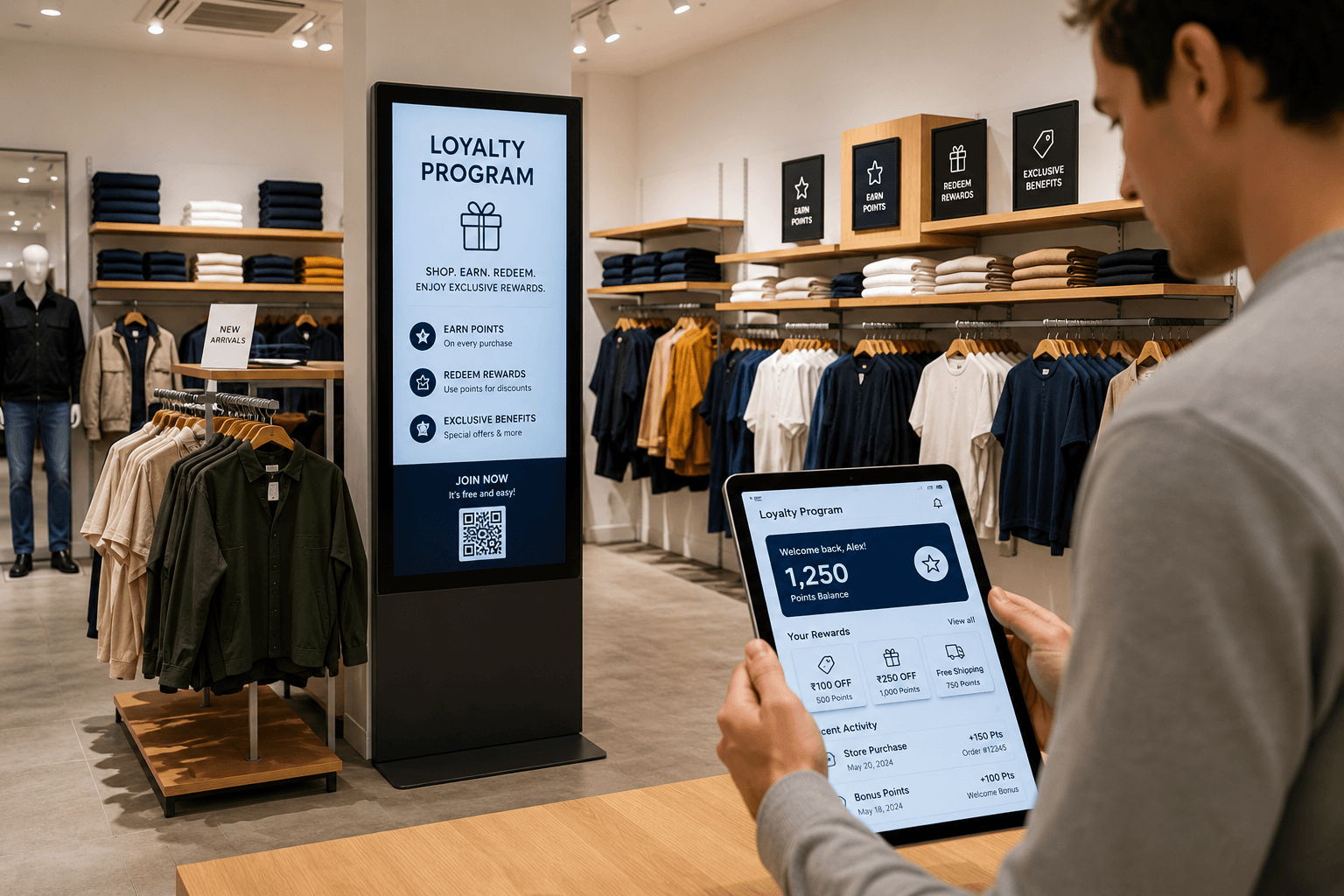
Most retail brands' first loyalty program is a third-party app - fast to set up, reasonable at small scale, and billed monthly for as long as the program exists. That arrangement works fine early on, but as a brand's customer base and order volume grow, those recurring fees start adding up, and the brand still doesn't own the underlying data or rewards logic driving one of its most valuable retention tools. This blog looks at what custom loyalty and rewards program software development actually involves, and when it makes more sense than continuing to rent that infrastructure.
Why Third-Party Loyalty Apps Are a Reasonable Starting Point
For a new or smaller retail brand, a third-party loyalty app makes real sense:
- Fast to implement without building rewards infrastructure from scratch
- Established point systems, redemption flows, and integrations already built and tested
- Lower upfront cost, with fees typically scaling with order volume or subscriber count
- No need for dedicated development resources to get a program running
At smaller scale, these advantages generally outweigh the ongoing subscription cost by a comfortable margin.
Why the Math Changes as a Brand Scales
The friction tends to show up once order volume and customer base grow meaningfully, since most third-party loyalty platforms charge based on usage - order count, active members, or transaction volume:
- Monthly fees that felt reasonable early on scale directly with the growth the program is supposed to be driving
- Feature gates often require moving to more expensive tiers as the program needs to do more
- Customer and rewards data lives inside the vendor's platform, not fully owned or portable
- Program logic is often limited to what the platform's rules engine supports, not what your brand actually wants to offer
What Custom Loyalty Program Development Actually Involves
Through dedicated Custom Software Development, a loyalty program can be architected specifically around your brand's actual rewards logic, customer data strategy, and product catalog, rather than adapted from a generic points-and-tiers template. This typically includes:
- Points, tiers, or hybrid reward structures reflecting exactly how your brand wants to reward customers
- Full ownership of customer loyalty data, rather than data living inside a third-party vendor's system
- Redemption logic tied precisely to your actual product catalog and promotional strategy
- Branding and experience that feels like a native part of your site or app, not an embedded third-party widget
Designing a Points and Rewards Structure That Actually Fits Your Brand
Generic loyalty platforms typically offer standard structures - points per dollar, simple tiers - that work reasonably well for straightforward retail. Custom development becomes worth considering when your brand wants:
- Reward structures tied to specific product categories or behaviors beyond simple purchase amount
- Tiered membership benefits that reflect your brand's actual customer segments
- Gamification elements - challenges, milestones, streaks - designed specifically around your customer experience, not a generic template
- Referral and social sharing mechanics integrated directly into the loyalty structure
Where AI Adds Value to a Loyalty Program
Beyond the core points-and-rewards mechanics, AI Automation can meaningfully improve program effectiveness, including:
- Personalized reward recommendations based on individual purchase history and behavior
- Predictive churn signals, flagging members whose engagement is dropping before they lapse entirely
- Automated, targeted promotions timed to individual customer behavior rather than blanket campaigns
- Smart segmentation for marketing based on actual loyalty and purchase patterns
Integration With Your Existing E-Commerce and POS Systems
A loyalty program needs to connect accurately to wherever purchases actually happen - your e-commerce platform, point-of-sale system, or both for brands with physical locations. Building these integrations properly, through API Integration, ensures points accrue and redeem correctly across every channel, rather than requiring manual reconciliation between systems that don't naturally share data.
Mobile Experience as a Core Part of Modern Loyalty Programs
Customers increasingly expect to check their points balance, browse rewards, and redeem offers from their phone. Through Mobile App Development, a loyalty program can extend to a dedicated mobile experience, or a strong mobile web presence, giving customers a genuinely convenient way to engage with the program wherever they're shopping.
Data Ownership as a Long-Term Strategic Advantage
One of the most underappreciated benefits of a custom loyalty program is full ownership of the customer data it generates - purchase patterns, engagement behavior, reward preferences. This data becomes a genuine strategic asset for marketing, product decisions, and customer insight, rather than living inside a third-party platform with limited export options and no guarantee it'll remain accessible if you ever want to switch providers.
Making the Case for Custom Loyalty Program Development
Custom development tends to deliver the strongest value when:
- Your order volume or member count has grown to the point where third-party platform fees represent a significant, ongoing cost
- Your brand's rewards vision genuinely exceeds what a generic points-and-tiers template supports
- Owning customer loyalty data matters strategically to your broader marketing and product decisions
- You're managing loyalty across multiple channels that a generic platform doesn't integrate cleanly
For smaller or newer retail brands, an established third-party loyalty app typically remains the more practical and lower-risk starting point.
Related Services
- Custom Software Development - architecting rewards logic and program structure around your brand
- AI Automation - powering personalized rewards, churn prediction, and targeted promotions
- API Integration - connecting loyalty logic to your e-commerce and POS systems
- Mobile App Development - building the mobile experience customers use to engage with rewards
Related Blogs
- Software Integration 101: Making Your Tools Work Together
- SaaS vs Custom Software: A Decision Framework
- AI Automation ROI: How to Measure If It's Actually Saving You Money
Frequently Asked Questions
At what point does a custom loyalty program make more sense than a third-party app?
It varies by fee structure, but many brands see the case for custom development strengthen once order volume or member count grows enough that platform fees represent a significant, ongoing cost relative to building and maintaining an owned system.
Do we lose access to established loyalty features by building custom?
Not necessarily. Standard mechanics like points, tiers, and referrals can all be built custom - the difference is that the structure and logic are built specifically around your brand rather than a generic template.
Can a custom loyalty program integrate with our existing POS system?
Yes, and this is often central to the value, ensuring points accrue and redeem correctly whether a customer shops online or in a physical store.
Why does owning loyalty program data matter?
Customer purchase and engagement data generated through the program becomes a genuine strategic asset for marketing and product decisions, rather than being locked inside a third-party vendor's platform with limited portability.
Is a custom loyalty program only worth it for large retail brands?
Generally, it makes more sense once transaction volume or platform fees have grown significant, though the exact threshold depends on your specific fee structure and how much your rewards vision exceeds generic template options.
Ready to Own Your Loyalty Program Infrastructure?
If recurring loyalty platform fees are scaling right alongside your growth, that's usually a sign it's worth evaluating what a custom-built program would actually cost to own instead. Weboraz builds rewards platforms architected around your brand's specific customer strategy, integrated with your existing e-commerce and POS systems from the start. Contact Us to talk through what a custom loyalty program built for your brand would involve.
Frequently asked questions
It varies by fee structure, but many brands see the case for custom development strengthen once order volume or member count grows enough that platform fees represent a significant, ongoing cost relative to building and maintaining an owned system.
Not necessarily. Standard mechanics like points, tiers, and referrals can all be built custom — the difference is that the structure and logic are built specifically around your brand rather than a generic template.
Yes, and this is often central to the value, ensuring points accrue and redeem correctly whether a customer shops online or in a physical store.
Customer purchase and engagement data generated through the program becomes a genuine strategic asset for marketing and product decisions, rather than being locked inside a third-party vendor's platform with limited portability.
Generally, it makes more sense once transaction volume or platform fees have grown significant, though the exact threshold depends on your specific fee structure and how much your rewards vision exceeds generic template options.
Related Articles

Insights
Multi-Location Business Management Software: Centralizing Operations Across Branches
Read More
Insights
Appointment Scheduling and Booking Software Development for Service-Based Businesses
Read More
Insights
E-Signature and Contract Management Software Development for Professional Services Firms
Read MoreNeed help applying this?
Our team can turn the ideas in this article into a clear plan and a polished build.
Contact Us