

Real estate agencies and brokers have no shortage of CRM options built specifically for the industry, and for a smaller team with a fairly standard lead flow, one of these off-the-shelf tools often works fine. The friction shows up as an agency grows — leads coming from more sources, listings that need to sync across multiple platforms, and follow-up workflows that don't quite match how the team actually works a deal from first inquiry to close. This blog looks at what custom real estate CRM and lead management software actually involves, and when it makes more sense than continuing to work around a generic platform's limitations.
Why Off-the-Shelf Real Estate CRMs Work Well at First
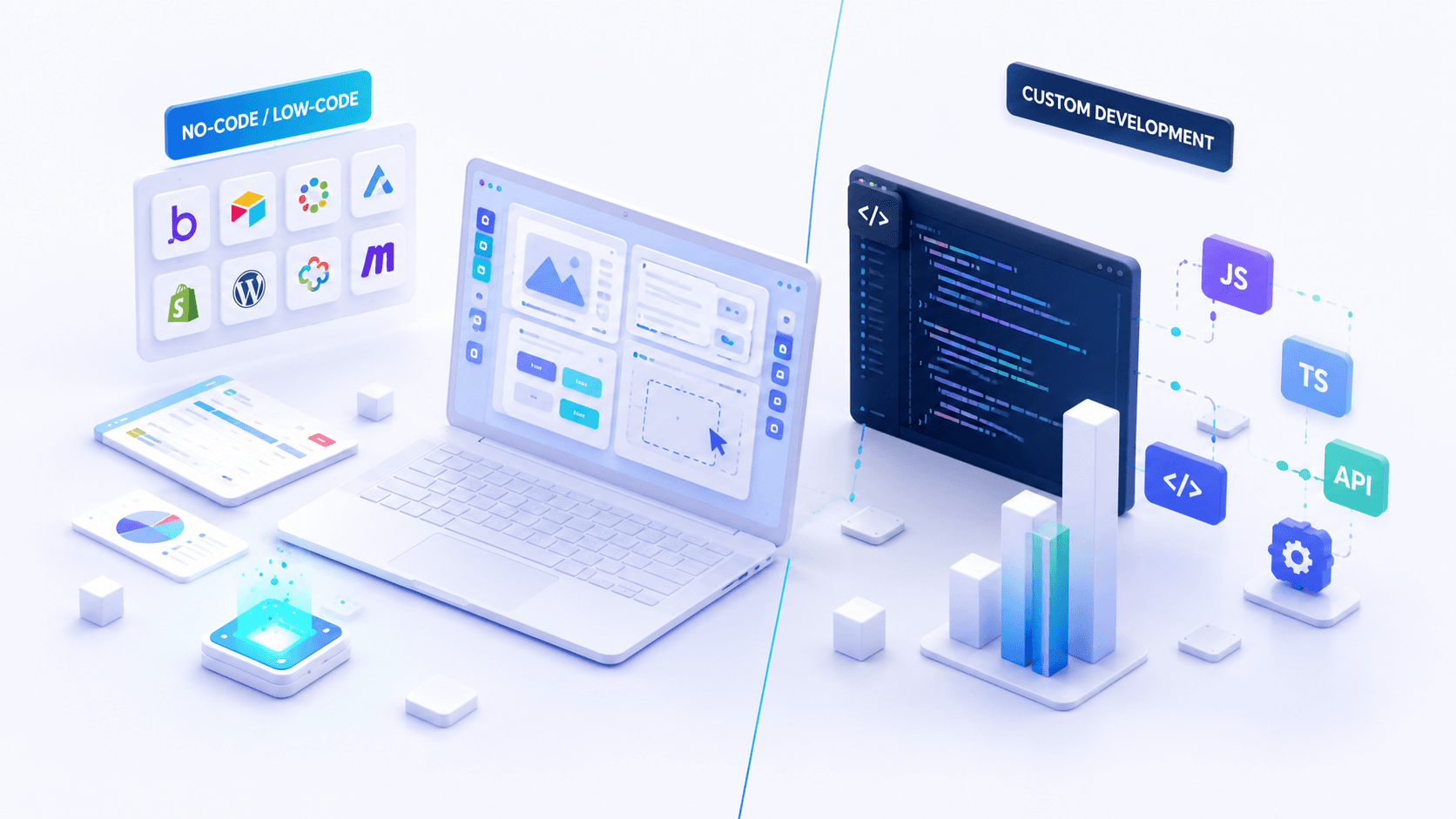
Established real estate CRM platforms offer real advantages, particularly for smaller teams:
- Fast implementation without building lead and listing infrastructure from scratch
- Built-in lead capture from common sources — websites, listing portals, social media
- Established automation for follow-up sequences and standard agent workflows
- Lower upfront cost, with predictable subscription pricing
For a team with a fairly standard sales process, these platforms can genuinely be the right tool for a long time.
Where Generic Real Estate CRMs Start to Show Limits
As an agency or brokerage grows, common friction points tend to appear:
- Lead sources beyond what the platform's native integrations support well
- Follow-up and nurture workflows that don't reflect how your specific team actually works a lead
- Listing data that needs to sync across your website, MLS, and multiple third-party portals without manual re-entry
- Per-agent or per-seat pricing that becomes a significant, growing cost as the team scales
- Reporting that doesn't reflect the specific pipeline metrics your brokerage actually tracks
What Custom Real Estate CRM Development Actually Involves
Through dedicated CRM Development, a system can be architected specifically around your agency's actual lead sources, follow-up cadence, and deal pipeline structure, rather than adapted from a generic real estate CRM template. This typically includes:
- Lead capture and routing logic reflecting your actual sources and how leads should be assigned to agents
- Follow-up and nurture sequences tuned to your specific sales process, not a generic default cadence
- Deal pipeline stages that match how your team actually tracks a transaction from inquiry to close
- Custom reporting on the specific metrics your brokerage or agency actually cares about
Property Listing Integration Without Manual Re-Entry
One of the most common operational headaches for growing agencies is keeping listing data consistent across multiple places — your own website, MLS feeds, and third-party portals. Through API Integration, listing data can sync automatically across every channel a property needs to appear on, eliminating the manual re-entry and inconsistency that comes with updating each platform separately.
Lead Management Built Around Your Actual Sales Process
Generic CRMs typically offer a standard lead pipeline that approximates how most real estate deals move, but doesn't necessarily reflect your specific team's actual process. Custom development allows lead management to be built around:
- Lead scoring criteria specific to what actually predicts conversion for your market and price points
- Assignment logic reflecting how your team actually distributes leads — by territory, specialty, or availability
- Follow-up timing tuned to your actual sales cycle length, rather than a generic real estate default
Where AI Adds Value to Real Estate Lead Management
Real estate generates substantial behavioral and market data, making it well suited to AI Automation, including:
- Lead scoring based on actual engagement and behavior patterns, prioritizing agents' time toward the most likely conversions
- Automated follow-up sequences personalized to a lead's specific property interests and stage in the process
- Predictive insights on which listings are likely to attract strong interest based on market patterns
- Smart matching between active leads and new listings that fit their stated preferences
Mobile Access for Agents in the Field
Real estate work happens largely away from a desk — showings, open houses, client meetings. Through Mobile App Development, agents can access lead details, update deal status, and respond to inquiries directly from a mobile device, rather than needing to return to an office to update the CRM after a showing.
Multi-Office and Brokerage-Level Considerations
For brokerages managing multiple offices or a larger agent roster, custom development allows for centralized visibility into performance and pipeline across the whole brokerage, while still giving individual agents or offices the local flexibility they need day to day — a structure most generic, single-office-oriented CRMs don't accommodate cleanly.
Making the Case for Custom Real Estate CRM Development
Custom development tends to deliver the strongest value when:
- Your lead sources or follow-up process have genuinely outgrown what a generic real estate CRM template supports
- Per-agent licensing costs are becoming significant as your team grows
- Listing data consistency across multiple channels has become a recurring manual burden
- You need reporting or multi-office visibility that off-the-shelf platforms don't handle well
For smaller teams with a fairly standard sales process, an established real estate CRM often remains the more practical and cost-effective choice.
Related Services
- CRM Development - architecting lead management and pipeline logic around your agency's actual process
- API Integration - syncing listing data across your website, MLS, and third-party portals
- AI Automation - powering lead scoring, personalized follow-up, and listing-match recommendations
- Mobile App Development - giving agents field access to leads and deal status
Related Blogs
- Software Integration 101: Making Your Tools Work Together
- Enterprise Software vs SaaS: Making the Right Choice for Scale
Frequently Asked Questions
Why do growing real estate agencies outgrow off-the-shelf CRM platforms?
Generic real estate CRMs are built around a standard sales process, so agencies with specific lead sources, follow-up workflows, or multi-office structures often find themselves working around platform limitations as they scale.
Can a custom real estate CRM sync with MLS and listing portals automatically?
Yes, and this integration is often central to the value, keeping listing data consistent across your website, MLS, and third-party portals without manual re-entry on each platform.
How does AI improve lead management for real estate specifically?
It can power lead scoring based on actual engagement patterns, personalized follow-up sequences, and smart matching between active leads and new listings that fit their preferences.
Is a custom CRM only worth it for large brokerages?
Not necessarily. It tends to make sense once lead volume, agent count, or listing sync complexity outweigh the convenience of a generic platform, which can happen at a fairly modest agency size.
Do agents need mobile access to a custom real estate CRM?
Generally yes, given how much real estate work happens away from a desk — mobile access lets agents update deal status and respond to leads directly from a showing or open house.
Considering a Custom CRM for Your Real Estate Business?
If lead follow-up, listing sync, or per-agent costs have become a recurring headache, that's usually a sign your agency has outgrown a generic real estate CRM. Weboraz builds lead management and listing platforms architected around how your team actually works a deal, with the integrations and reporting your brokerage actually needs. Contact Us to talk through what a system built for your agency would involve.
Frequently asked questions
Generic real estate CRMs are built around a standard sales process, so agencies with specific lead sources, follow-up workflows, or multi-office structures often find themselves working around platform limitations as they scale.
Yes, and this integration is often central to the value, keeping listing data consistent across your website, MLS, and third-party portals without manual re-entry on each platform.
It can power lead scoring based on actual engagement patterns, personalized follow-up sequences, and smart matching between active leads and new listings that fit their preferences.
Not necessarily. It tends to make sense once lead volume, agent count, or listing sync complexity outweigh the convenience of a generic platform, which can happen at a fairly modest agency size.
Generally yes, given how much real estate work happens away from a desk — mobile access lets agents update deal status and respond to leads directly from a showing or open house.
Related Articles


Need help applying this?
Our team can turn the ideas in this article into a clear plan and a polished build.
Contact Us