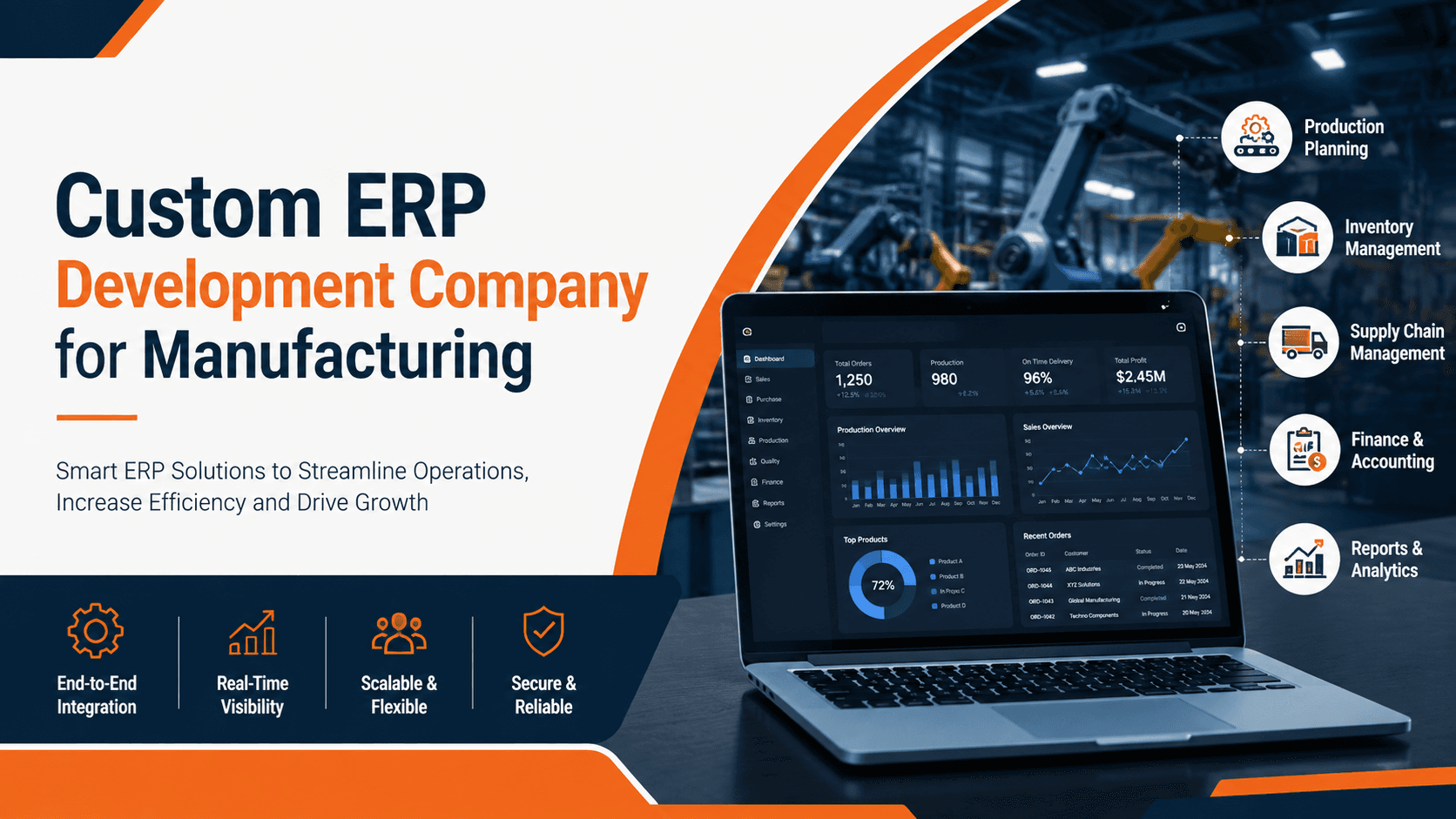
Most manufacturing and distribution businesses didn't pick their ERP system so much as inherit it, or adopt one of the well-known platforms because it seemed like the safe default choice at the time. Years later, many find themselves customizing modules, building workarounds, and paying for consultants just to make the system do what their operations actually need. This blog looks at when custom ERP development makes more sense than continuing to stretch a generic platform, and what actually goes into building one.
Why Generic ERP Platforms Often Stop Fitting
Platforms like SAP or Odoo are built to serve an enormous range of businesses across industries, which means their defaults represent a broad average, not your specific operation. Common friction points include:
- Standard modules that don't match your actual production process or distribution model
- Expensive, ongoing customization work just to approximate what your business needs
- Rigid workflows that force your team to adapt to the software, rather than the other way around
- Licensing and implementation costs that scale steeply as your operation grows
For businesses with fairly standard manufacturing or distribution processes, these platforms can work well. For businesses with specific production logic, unusual inventory structures, or unique distribution requirements, the gap between what the platform offers and what the business actually needs tends to widen over time.
What ERP Software Actually Needs to Handle
At its core, an ERP system needs to unify data and workflows across the parts of the business that generic point solutions handle separately:
- Production planning and scheduling
- Inventory and materials management
- Order processing and fulfillment
- Procurement and supplier coordination
- Financial reporting tied to actual operational data
The complexity isn't really in any single piece - it's in how accurately the system reflects how your specific operation actually runs, end to end.
Manufacturing-Specific ERP Requirements
Manufacturing operations tend to need particular depth in a few areas that generic ERP defaults often handle only loosely:
- Bill of materials management that reflects your actual product structures
- Production scheduling that accounts for real machine capacity and labor constraints
- Quality control tracking tied directly to specific production runs
- Work-in-progress visibility across every stage of the production floor
Generic platforms typically offer some version of these features, but often in a form that assumes a standard production model your business may not actually follow.
Distribution-Specific ERP Requirements
Distribution businesses tend to need strength in a different but overlapping set of areas:
- Multi-warehouse inventory visibility and allocation
- Order fulfillment logic tied to your actual shipping and carrier relationships
- Demand forecasting based on your real historical sales patterns
- Pricing and margin visibility across products, customers, or regions
Businesses handling both manufacturing and distribution together often find generic platforms particularly strained, since they're trying to serve two operationally different needs within one rigid structure.
What Custom ERP Development Actually Involves
Building a custom ERP through dedicated Custom Software Development means the system is architected specifically around your production logic, inventory structure, and reporting needs, rather than adapted from a generic module set. This typically includes:
- Production and inventory logic that reflects your actual processes, not a generalized template
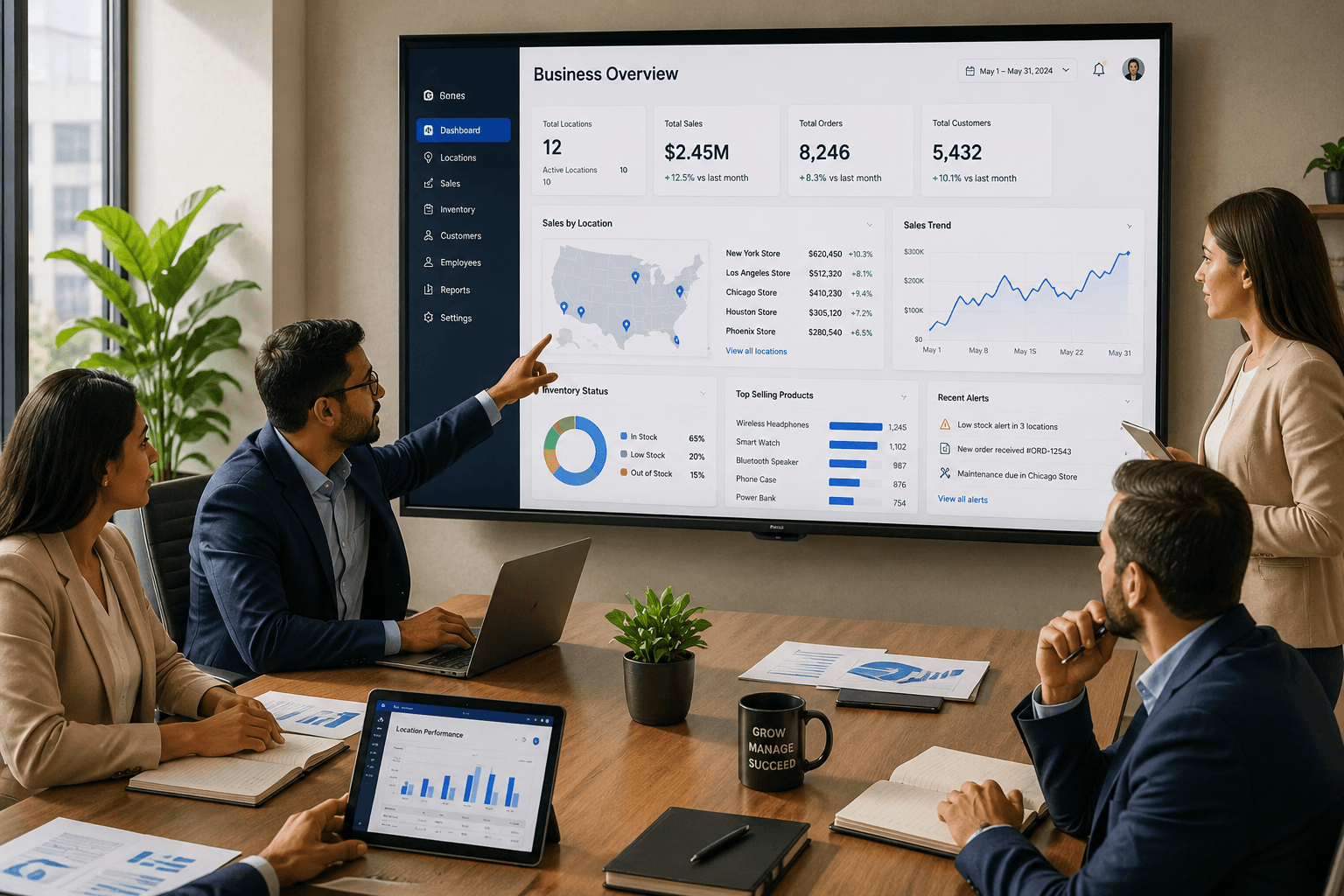
- Reporting built around the specific metrics your operations and finance teams actually track
- A user experience matched to how your specific teams - floor staff, warehouse teams, office staff - actually work
- Architecture designed to scale with your business, rather than requiring expensive re-licensing as you grow
Where AI Fits Into a Modern ERP Build
Manufacturing and distribution generate substantial operational data, which makes them well suited to AI Automation, including:
- Demand forecasting that adjusts for seasonality and real historical patterns
- Predictive maintenance flagging based on equipment and production history
- Automated exception handling, surfacing production delays or inventory issues before they compound
- Smart reorder and procurement triggers based on live inventory and lead-time data
Built into a custom ERP from the start, these capabilities tend to be considerably more accurate than generic automation features bundled into an off-the-shelf platform.
Integration With Existing Systems
Manufacturing and distribution businesses rarely start from a blank slate - most already run accounting software, CRM tools, or specialized equipment systems. A meaningful part of ERP development is building integrations that let these systems share data accurately, rather than requiring manual reconciliation between disconnected tools. This is often the real difference between an ERP that becomes a genuine single source of truth and one that just becomes another system to check.
Mobile Access for Floor and Warehouse Teams
Much of manufacturing and distribution work happens away from a desk - on the production floor, in the warehouse, during receiving or shipping. Extending ERP visibility to mobile devices through Mobile App Development lets floor staff update production status in real time and gives warehouse teams direct access to inventory and order data without relying on paper logs or radio calls back to the office.
Making the Build vs. Buy Decision for ERP
Custom ERP development tends to deliver the strongest value when:
- Your production or distribution processes genuinely diverge from what generic platforms assume
- You're already paying significant, ongoing customization or consulting costs on an existing platform
- Licensing costs are becoming steep relative to your actual usage and headcount
- Real-time visibility and forecasting accuracy directly affect your margins and delivery reliability
For businesses with relatively standard operations, an established platform may remain the more practical choice - the decision comes down to how far your actual operations diverge from what that platform was built to assume.
Related Services
Related Blogs
- Custom CRM vs Off-the-Shelf CRM: A Real Cost Comparison
- Enterprise Software vs SaaS: Making the Right Choice for Scale
- Legacy System Modernization: When and How to Upgrade
- Software Integration 101: Making Your Tools Work Together
Frequently Asked Questions
Why do manufacturing businesses outgrow generic ERP platforms like SAP or Odoo?
Generic platforms are built to serve a broad range of industries, so businesses with specific production logic, unusual inventory structures, or unique distribution needs often end up paying for extensive customization just to approximate what a custom build would deliver natively.
Is custom ERP development more expensive than an established platform?
Upfront, generally yes, since it involves dedicated development rather than licensing an existing product. Over time, avoiding steep licensing costs and ongoing customization fees can make custom development more cost-effective at scale.
Can a custom ERP handle both manufacturing and distribution operations together?
Yes, and this is often one of the strongest reasons businesses choose custom development, since generic platforms tend to be particularly strained when serving both operationally different needs within one rigid structure.
How does AI automation improve ERP systems for manufacturing and distribution?
It can power more accurate demand forecasting, predictive maintenance, and automated exception handling, using your business's actual operational data rather than generic assumptions.
Is custom ERP only worth it for large manufacturing or distribution companies?
Not necessarily. It tends to make sense once ongoing customization costs, licensing fees, or operational complexity outweigh the convenience of a generic platform, regardless of company size.
Ready to Move Past ERP Workarounds?
If your team spends more time customizing, patching, or working around your current ERP than actually using it, that's usually a sign the platform has stopped fitting your operation. Weboraz builds ERP systems architected around your real production and distribution processes, with automation applied where it genuinely reduces manual work. Contact Us to talk through what a system built for how your business actually operates would look like.
Frequently asked questions
Generic platforms are built to serve a broad range of industries, so businesses with specific production logic, unusual inventory structures, or unique distribution needs often end up paying for extensive customization just to approximate what a custom build would deliver natively.
Upfront, generally yes, since it involves dedicated development rather than licensing an existing product. Over time, avoiding steep licensing costs and ongoing customization fees can make custom development more cost-effective at scale.
Yes, and this is often one of the strongest reasons businesses choose custom development, since generic platforms tend to be particularly strained when serving both operationally different needs within one rigid structure.
It can power more accurate demand forecasting, predictive maintenance, and automated exception handling, using your business's actual operational data rather than generic assumptions.
Not necessarily. It tends to make sense once ongoing customization costs, licensing fees, or operational complexity outweigh the convenience of a generic platform, regardless of company size.
Related Articles

Need help applying this?
Our team can turn the ideas in this article into a clear plan and a polished build.
Contact Us