
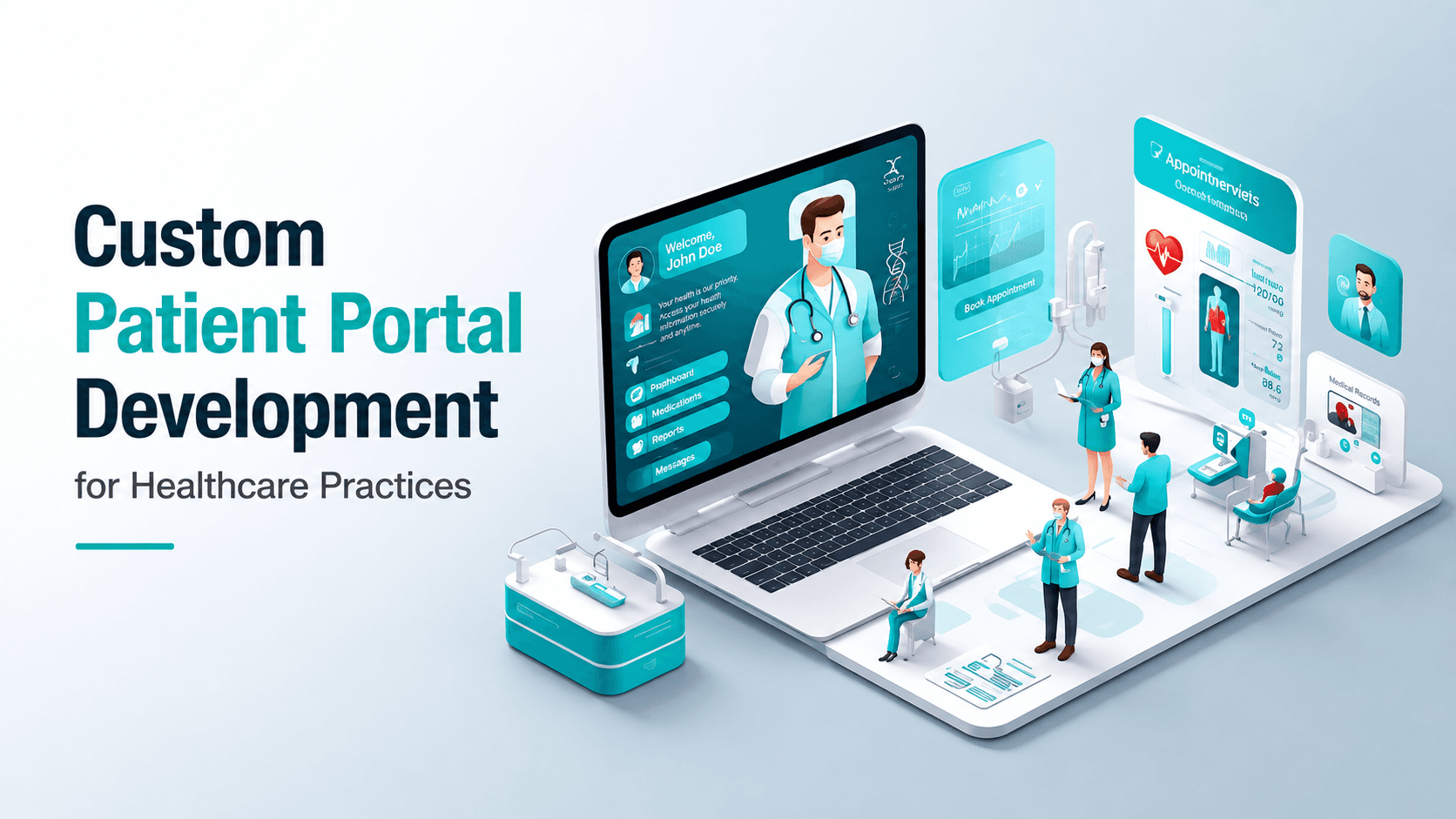
Most patients accessing their care through a portal today are actually using whatever came bundled with their provider's EHR system - a generic interface that looks and feels identical across hundreds of unrelated practices, with limited ability to reflect how any single clinic actually communicates with its patients. For practices frustrated by that rigidity, a custom-built patient portal offers a genuinely different path. This blog looks at what custom patient portal development actually involves, and why more clinics are moving away from bundled EHR-vendor portals toward something built specifically around their workflow.
Why Bundled EHR Portals Frustrate Practices
EHR vendors typically include a patient portal as part of their broader platform, but these portals are built to serve every client on that EHR system, not any one practice specifically. Common frustrations include:
- Generic branding that doesn't reflect the practice's actual identity or patient experience
- Rigid workflows for appointment booking, messaging, or forms that don't match how the practice actually operates
- Limited ability to add features specific to the practice's specialty or patient population
- Dependence on the EHR vendor's release schedule for any meaningful improvement or fix
For practices with fairly standard needs, a bundled portal can be an acceptable tradeoff. For practices trying to build a distinct patient experience or support specific workflows, the limitations tend to become a genuine source of friction over time.
What a Patient Portal Actually Needs to Do
At its core, a patient portal needs to give patients secure, convenient access to their care relationship, typically including:
- Appointment scheduling and management
- Secure messaging between patients and providers or staff
- Access to medical records, test results, and visit summaries
- Bill payment and insurance information
- Intake forms and pre-visit questionnaires
The baseline functionality is fairly consistent across portals - what differs is how well it's tailored to a specific practice's actual patient population and workflow.
What Custom Patient Portal Development Actually Involves
Building a custom portal through dedicated Custom Software Development means the platform is architected specifically around your practice's branding, specialty, and patient communication style, rather than adapted from a template shared across an entire EHR vendor's client base. This typically includes:
- A branded interface that reflects the practice's actual identity, not a generic vendor template
- Workflows built around how your specific practice actually schedules, communicates, and follows up with patients
- Specialty-specific features relevant to your patient population, rather than a one-size-fits-all feature set
- Direct integration with your existing EHR or practice management system, so data stays connected rather than duplicated
Security and Compliance Are Non-Negotiable
Patient portals handle protected health information, which makes secure architecture and regulatory compliance a foundational requirement, not an optional add-on. This typically includes:
- Encryption for data both in transit and at rest
- Strict access controls and authentication, including support for multi-factor authentication
- Detailed audit logging of who accessed what patient information and when
- Architecture built to support HIPAA compliance requirements from the ground up
Building compliance into the system from the start avoids the far more disruptive process of retrofitting security architecture after a gap is discovered during an audit or review.
Interoperability Without Requiring a Full HL7/FHIR Build-Out
Many practices assume a custom portal means building full HL7/FHIR interoperability infrastructure from scratch, which can feel like an unnecessarily heavy lift for a single practice. In reality, a custom portal can integrate with your existing EHR through more targeted API connections specific to what your portal actually needs to display and update, rather than requiring a full-scale interoperability platform built for exchanging data across an entire health system.
Where AI Adds Genuine Value to a Patient Portal
Beyond basic functionality, AI Automation can meaningfully improve the patient experience within a portal, including:
- Automated appointment reminders and follow-up messaging tailored to visit type
- Smart triage for patient messages, routing urgent questions appropriately
- Automated intake form processing that pre-populates records accurately
- Personalized health reminders based on a patient's specific care plan
These capabilities are difficult to layer onto a generic, vendor-bundled portal, but can be designed in intentionally with a custom build.
Mobile Access for Modern Patient Expectations
Patients increasingly expect to manage appointments, check records, and message their provider from their phone, not just a desktop browser. Through Mobile App Development, a custom portal can extend to a dedicated mobile experience, or a well-built responsive/PWA approach, depending on how much of the interaction genuinely benefits from a native app versus a strong mobile web experience.
Reducing Administrative Burden on Practice Staff
A well-designed custom portal doesn't just improve the patient experience - it reduces manual work for practice staff by automating scheduling, intake, and routine communication that would otherwise require phone calls or manual data entry. This operational benefit is often as significant to a practice's decision to go custom as the patient-facing experience itself.
Making the Case for a Custom Patient Portal
Custom patient portal development tends to deliver the strongest value when:
- Your practice's patient experience or branding is being actively limited by a generic vendor portal
- Specific workflows - specialty intake, unique scheduling logic, particular communication patterns - don't fit the bundled portal's rigid structure
- You want deeper integration with your existing systems than the vendor portal currently supports
- Patient engagement and satisfaction are directly tied to how well the digital experience reflects your practice
For practices with fairly standard needs and no strong dissatisfaction with their current bundled portal, sticking with the EHR-vendor default may remain the more practical choice.
Related Services
- Custom Software Development - architecting the patient portal around your practice's specific workflow and branding
- AI Automation - powering automated reminders, smart triage, and personalized patient communication
- Mobile App Development - extending portal access to a dedicated mobile experience
- Web Development - building the branded, patient-facing portal interface
Related Blogs
- App Security Best Practices Every Founder Should Know
- How to Write a Software Requirements Document
- Software Integration 101: Making Your Tools Work Together
Frequently Asked Questions
Why do practices move away from the patient portal bundled with their EHR?
Bundled portals are built to serve every client on that EHR platform, so they're often generic in branding and workflow, and practices with specific needs or a distinct patient experience in mind tend to find them limiting over time.
Does a custom patient portal require full HL7/FHIR interoperability infrastructure?
Not necessarily. Many custom portals integrate with an existing EHR through more targeted API connections specific to what the portal actually needs, rather than requiring a full-scale interoperability build.
How is HIPAA compliance handled in a custom patient portal?
Compliance needs to be built into the architecture from the start, including encryption, strict access controls, and detailed audit logging, rather than added on after the platform is already built.
Can a custom patient portal integrate with our existing EHR system?
Yes, and this is typically one of the central goals of a custom build, connecting portal functionality directly to existing records and scheduling data rather than duplicating it separately.
Is a custom patient portal only worth it for large healthcare organizations?
Not necessarily. It tends to make sense for any practice where a generic, bundled portal is actively limiting the patient experience or specific workflow needs, regardless of practice size.
Considering a Custom Patient Portal for Your Practice?
If your patients are navigating a generic portal that looks and feels identical to every other clinic on the same EHR, that's often the clearest sign your practice has outgrown the bundled default. Weboraz builds patient portals architected around your specific workflow, branding, and specialty, with security and compliance built in from the start. Contact Us to talk through what a portal built for your practice would actually involve.
Frequently asked questions
Bundled portals are built to serve every client on that EHR platform, so they're often generic in branding and workflow, and practices with specific needs or a distinct patient experience in mind tend to find them limiting over time.
Not necessarily. Many custom portals integrate with an existing EHR through more targeted API connections specific to what the portal actually needs, rather than requiring a full-scale interoperability build.
Compliance needs to be built into the architecture from the start, including encryption, strict access controls, and detailed audit logging, rather than added on after the platform is already built.
Yes, and this is typically one of the central goals of a custom build, connecting portal functionality directly to existing records and scheduling data rather than duplicating it separately.
Not necessarily. It tends to make sense for any practice where a generic, bundled portal is actively limiting the patient experience or specific workflow needs, regardless of practice size.
Related Articles


Need help applying this?
Our team can turn the ideas in this article into a clear plan and a polished build.
Contact Us