Most logistics companies didn't choose their current systems so much as inherit them - a mix of spreadsheets, an aging inventory tool, and a transportation management system that was a reasonable fit years ago but hasn't kept pace with how the business actually operates today. The result is often a supply chain that's harder to see into than it should be, with visibility gaps that cost real money in delays, overstock, and missed coordination. This blog looks at what custom supply chain management software development actually involves, and when it makes more sense than patching together generic tools.
Why Generic Supply Chain Tools Often Fall Short
Off-the-shelf logistics and inventory platforms are built to serve a broad range of businesses, which means they're rarely a precise fit for any one of them. Common friction points include:
- Rigid workflows that don't match how your warehouses, routes, or fulfillment process actually work
- Limited integration with the specific carriers, suppliers, or systems you already rely on
- Reporting that shows generic metrics rather than the specific visibility your operations team actually needs
- Per-user or per-location pricing that scales poorly as the business grows
For a smaller operation with straightforward needs, these tradeoffs are often manageable. For a growing logistics company, they tend to compound into real operational drag.
What Supply Chain Software Actually Needs to Handle
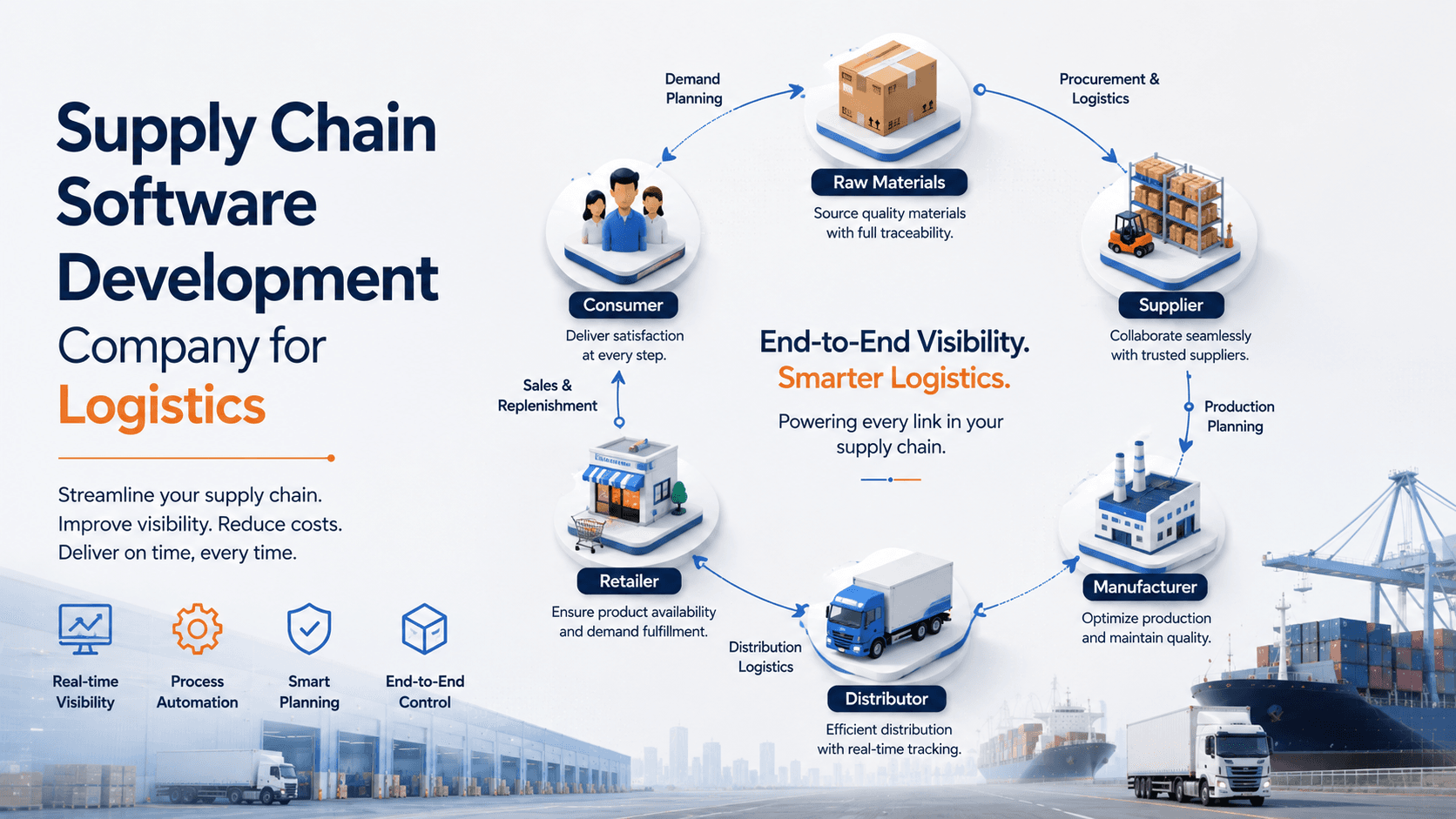
A functioning supply chain system typically needs to manage several interconnected pieces at once:
- Real-time inventory visibility across multiple warehouses or locations
- Order processing and fulfillment tracking from placement through delivery
- Supplier and vendor coordination, including purchase orders and lead times
- Transportation and fleet visibility, including route and delivery status
- Reporting that connects all of the above into a single, accurate picture
The complexity isn't in any one of these pieces individually - it's in how well they connect to each other, which is where generic tools tend to struggle most.
Custom Inventory Management as the Operational Core
For many logistics businesses, inventory accuracy is the single biggest lever for reducing cost and improving service. A custom inventory management system, built through dedicated Custom Software Development, can be architected specifically around your actual SKU structure, warehouse layout, and reorder logic, rather than adapted from a generic template that assumes a standard setup you don't actually have.
This typically includes:
- Real-time stock tracking across every warehouse or fulfillment location
- Automated reorder triggers based on your actual demand patterns, not a generic threshold
- Full visibility into stock movement, from receiving through shipment
Where Automation Delivers the Fastest ROI in Logistics
Supply chain operations involve a lot of repetitive, rules-based work that's well suited to automation - and this is often where logistics companies see the quickest measurable return. Through AI Automation, common wins include:
- Automated purchase order generation based on live inventory thresholds
- Predictive demand forecasting that adjusts for seasonality and historical patterns
- Automated exception flagging, surfacing delayed shipments or unusual stock movement before they become bigger problems
- Route optimization that adjusts to real-time conditions rather than a static plan
Unlike generic automation features bundled into off-the-shelf platforms, automation built into a custom system can be tuned precisely to your specific operational patterns.
Integration With Existing Systems Is Often the Real Challenge
Logistics companies rarely start from a blank slate - most already have some combination of ERP, CRM, accounting, and carrier systems already in place. A significant part of supply chain software development is building integrations that let these systems share data accurately, rather than requiring manual reconciliation between them. This is frequently the difference between a system that genuinely improves visibility and one that just adds another disconnected dashboard to check.
Real-Time Visibility as a Competitive Advantage
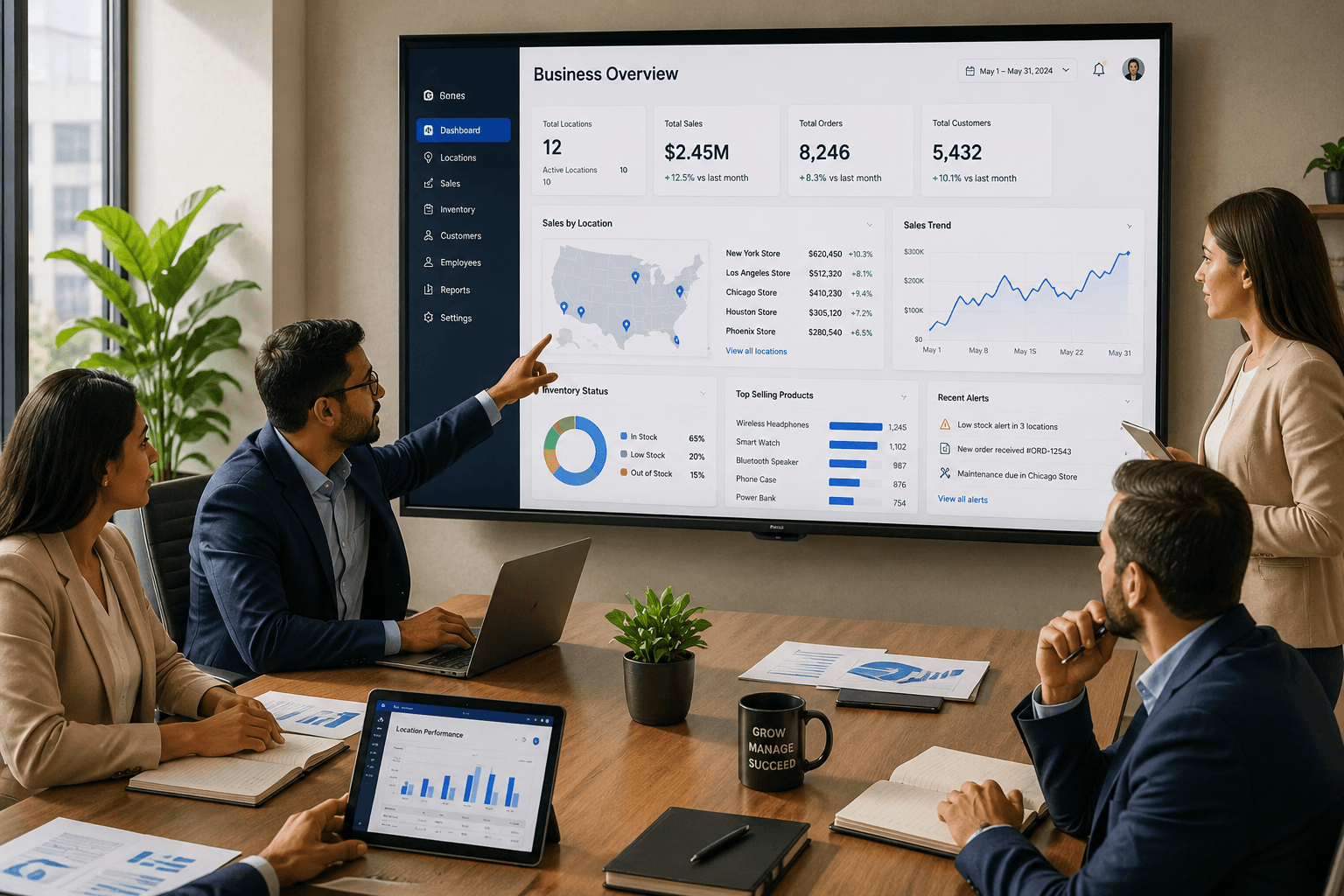
Customers and partners increasingly expect accurate, real-time answers about order and shipment status, not vague estimates. Custom-built dashboards can pull live data from across your systems into a single, accurate view - for your team internally, and in some cases for customers checking their own order status directly, reducing the manual "let me check and get back to you" cycle that slows down customer service.
Mobile Access for Warehouse and Field Operations
Much of logistics work happens away from a desk - on the warehouse floor, in a truck, at a delivery point. Extending supply chain visibility to mobile devices through Mobile App Development lets warehouse staff scan and update inventory in real time, and gives drivers or field teams direct access to route and delivery information without relying on radio calls or manual paperwork.
Planning for Scale From the Start
Supply chain software that works well at a smaller scale can start breaking down as order volume, SKU count, or warehouse locations grow. Building with scalability in mind from the outset - rather than as an afterthought once growth creates strain - avoids the costly rebuild that often follows outgrowing a system that wasn't architected to handle it.
Making the Case for Custom Development
Custom supply chain software tends to deliver the strongest value when:
- Your operations don't fit neatly into a generic platform's assumptions
- You're managing multiple systems that don't currently talk to each other well
- Per-location or per-user licensing costs are becoming significant as you scale
- Real-time visibility and forecasting accuracy directly affect your margins
For logistics companies with relatively standard needs, an established platform may still be the more practical choice - the decision comes down to how much your specific operations diverge from what a generic tool assumes.
Related Services
- Custom Software Development - architecting supply chain and inventory systems around your actual operations
- AI Automation - powering demand forecasting, automated reordering, and exception handling
- Mobile App Development - extending visibility to warehouse floors and field teams
- Web Development - building the dashboards and interfaces that make supply chain data usable day to day
Related Blogs
Frequently Asked Questions
Why do logistics companies outgrow generic supply chain software?
Generic platforms are built for a broad range of businesses, so they often can't match specific warehouse layouts, carrier relationships, or reporting needs - gaps that widen as a company grows.
What's the difference between custom inventory management and an off-the-shelf inventory tool?
Custom inventory management is architected around your actual SKU structure, warehouse setup, and reorder logic, while off-the-shelf tools apply a generic structure that may only partially fit your operations.
How does AI automation help with supply chain management specifically?
It can automate repetitive, rules-based tasks like reorder triggers, demand forecasting, and exception flagging, reducing manual monitoring while improving accuracy and response time.
Is custom supply chain software only worth it for large logistics companies?
Not necessarily. It tends to make sense once operational complexity, integration needs, or licensing costs start outweighing the convenience of a generic platform, regardless of company size.
Can custom supply chain software integrate with our existing ERP or CRM systems?
Yes - integration with existing systems is often one of the central goals of a custom build, connecting data that would otherwise require manual reconciliation between separate tools.
Ready to Replace an Outdated Supply Chain System?
If your team is stitching together spreadsheets, a legacy inventory tool, and manual status checks just to know what's actually happening in your supply chain, that's usually a sign the underlying system has stopped keeping up. Weboraz builds custom logistics and inventory software architected around your real warehouses, carriers, and order flow, with automation applied where it genuinely reduces manual work. Contact Us to talk through what a system built for your actual operations would look like.
Frequently asked questions
Generic platforms are built for a broad range of businesses, so they often can't match specific warehouse layouts, carrier relationships, or reporting needs - gaps that widen as a company grows.
Custom inventory management is architected around your actual SKU structure, warehouse setup, and reorder logic, while off-the-shelf tools apply a generic structure that may only partially fit your operations.
It can automate repetitive, rules-based tasks like reorder triggers, demand forecasting, and exception flagging, reducing manual monitoring while improving accuracy and response time.
Not necessarily. It tends to make sense once operational complexity, integration needs, or licensing costs start outweighing the convenience of a generic platform, regardless of company size.
Yes - integration with existing systems is often one of the central goals of a custom build, connecting data that would otherwise require manual reconciliation between separate tools.
Related Articles

Need help applying this?
Our team can turn the ideas in this article into a clear plan and a polished build.
Contact Us